
Virtues of the Aquamarine Stone
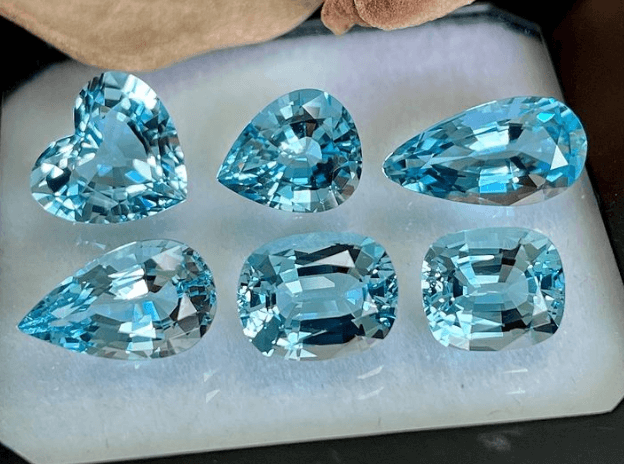
Aquamarine is the quintessential stone of the seas and oceans. Protector of sailors, it possesses soothing virtues. Its deep blue and green hues make it the most popular beryl after emerald. Once regarded as a precious stone, it remains highly prized today by jewellers and goldsmiths.
In crystal healing, aquamarine opens you up to others and develops your communication skills. Set into jewellery, it proves as beautiful as it is powerful. Whether you choose it as a bracelet or as an aquamarine pendant, it will bring you energetic virtues.
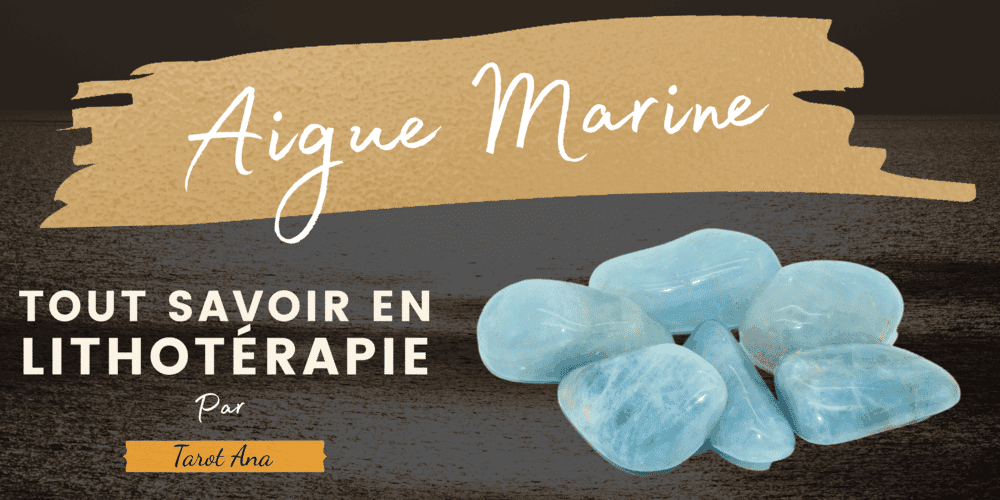
Aquamarine: its virtues and properties in crystal healing
| Nom scientifique | Béryl |
| Lieux d’extraction | Angola, Brésil, Chine, États-Unis, Inde, Namibie, Nigéria, Madagascar, Mozambique, Pakistan, Russie, Zambie, Zimbabwe |
| Couleur | Bleu-vert |
| Chakra | 5me chakra de la Gorge, Vishuddha |
| Signes astrologiques | Verseau, Poisson, Gémeaux, Balance |
| Vertus énergétiques | Méditation, communication et protection |
Geological composition and formation of aquamarine
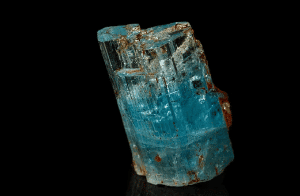
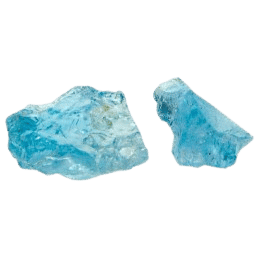
Aquamarine belongs to the cyclosilicate group. Its transparency, with a shade ranging between indigo and light green, is explained by its iron-bearing composition.
In the 16th century, Blaise de Vigenère officially distinguished it from the other varieties of beryl, with which it had until then been confused. Rather rare on the planet, this semi-precious stone grows only under very particular geological conditions.
No products found.
Specific growth conditions
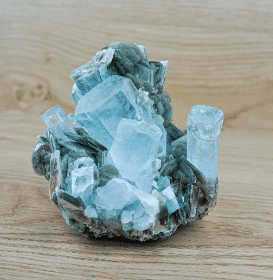
Aquamarine gems grow within pegmatite rocks.
They appear either in cracks in the rock or in crystal pockets known as druses.
Their size depends on the amount of water present in the fluid (the result of the unmixing of granitic magma).
Pegmatites, a complex geological formation
Pegmatites arise from the crystallisation of a silicate magma rich in dissolved water. As it cools, it absorbs the components needed to solidify into granite: quartz, potassium feldspar and mica.
The plutonic rock taking shape then ejects a hydrothermal fluid rich in incompatible minerals, known as pneumatolytic: beryllium, epidolite, phlogopite, phosphate, topaz, and so on. They accumulate at its edges in an aqueous mud: the pegmatite.
A rare growth phenomenon
When the surrounding pressure increases, the solidified plutonic rock cracks. The pegmatites then seep into the fractures and fill them. After an extremely long geological span of time, euhedral crystals appear within them in the form of veins.
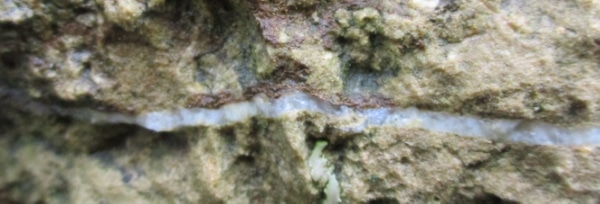
If the quantities of mineral-laden fluids are insufficient to fill the fractured spaces, druses develop and the crystals grow within them in pockets.
Beryl, a family of semi-precious and precious stones
Beryls form a single, unified mineral entity under the nomenclature established by the International Mineralogical Association (IMA). The latter recognises none of the names designating the different shades of beryl. Jewellers and crystal therapists alike, however, distinguish:
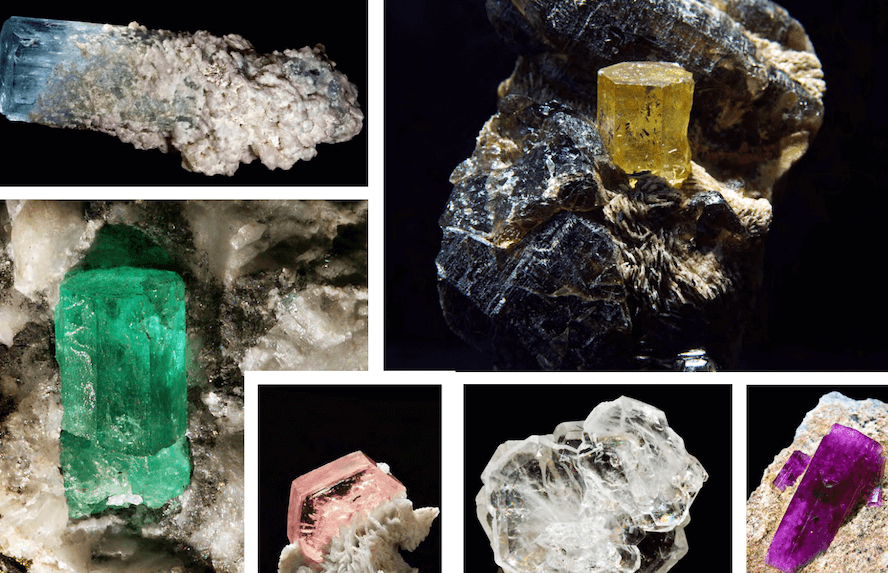
- aquamarine. Its colour, ranging from green to indigo blue, is due to the presence of iron;
- the bixbite. Its currant-red hue reflects its richness in manganese;
- emerald. Its emblematic intense green shade comes from traces of chromium;
- the goshenite. Colourless, this stone is made of pure beryl;
- heliodor. The iron it contains gives it hues ranging from green to honey by way of gold;
- the morganite. Pink to orange in colour, it forms thanks to lithium and caesium.
Characteristics of aquamarine
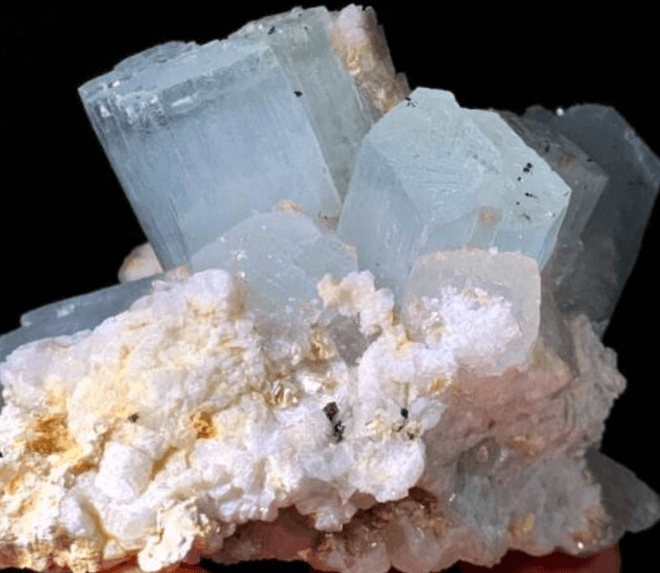
Aquamarine is distinguished from the other varieties of beryl by its bluish colour. This elongated hexagonal crystal has basal faces that are occasionally truncated.
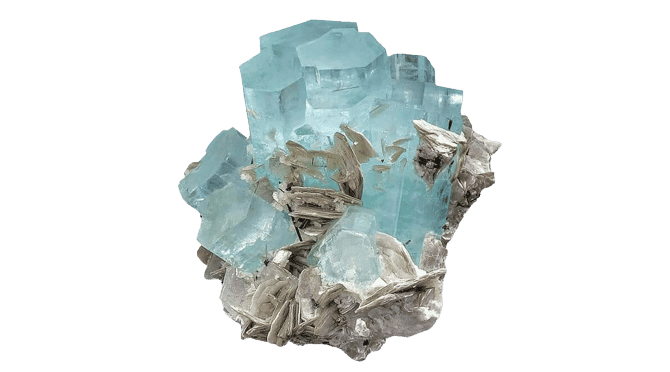
It is characterised by a transparency and clarity typical of the beryl family. Its unique shimmer is due to its particular crystallographic growth structure. It is this that produces its pleochroism.
A crystallography typical of beryls
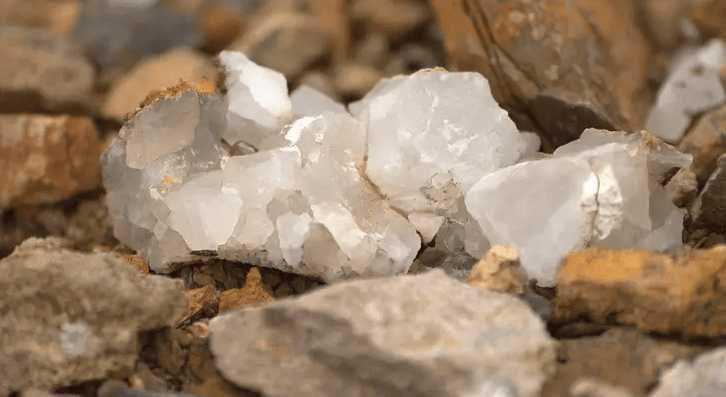
Aquamarine has an elementary structure characteristic of its family: a ring of six silica tetrahedra ending in two free vertices. The elementary units of beryl stack along their axis of symmetry.
Between each layer lie aluminium and beryllium. In aquamarine, some of the aluminium ions are replaced by iron. It gives the gem its distinctive bluish hues.
Remarkable durability
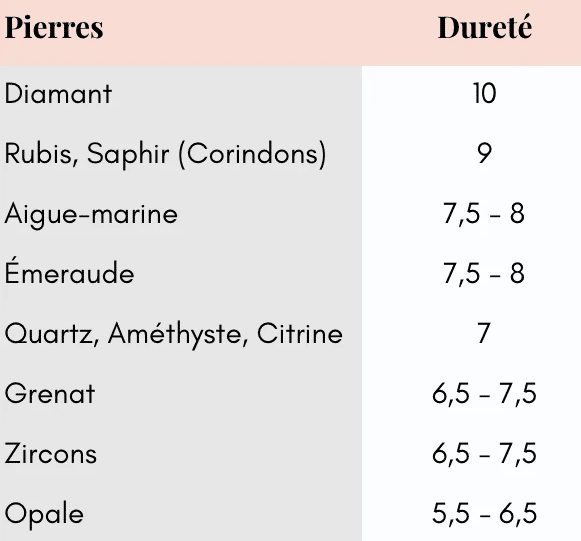
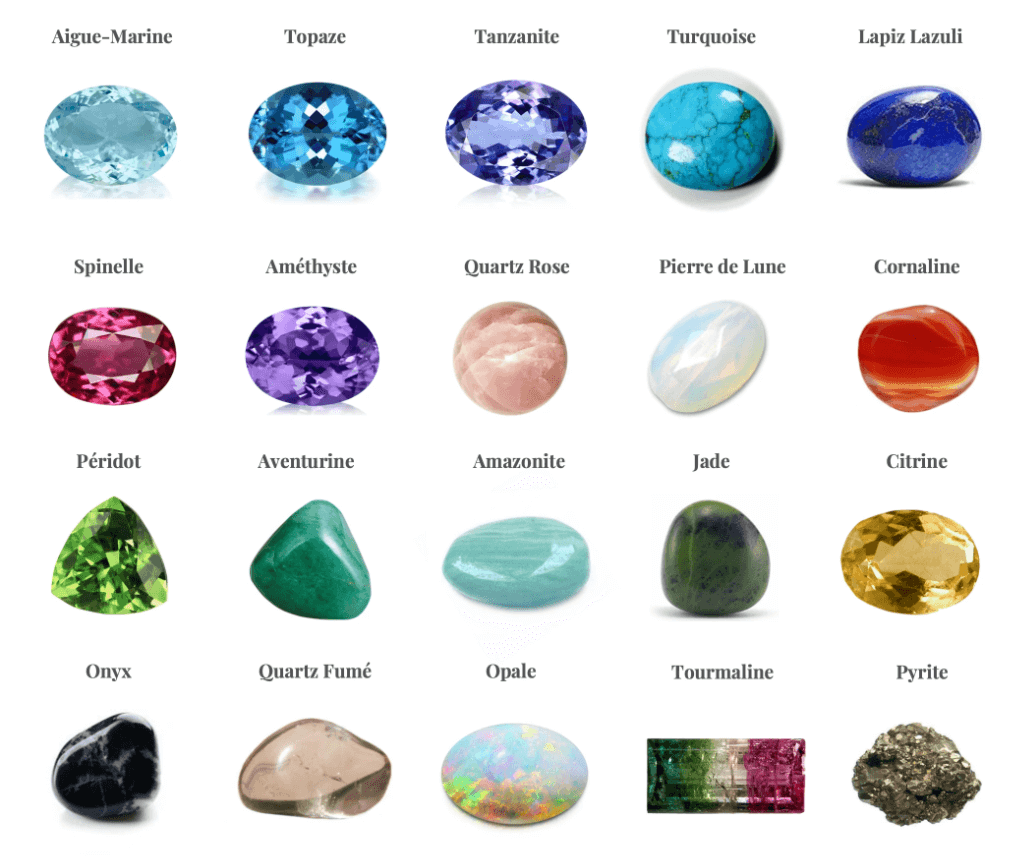
Compared with the other bluish semi-precious stones, aquamarine is far more durable.
On the Mohs scale, it sits between 7.5 and 8, which gives it excellent resistance to impacts and drops. It thus proves ideal for making jewellery, whether pendants or bracelets.
With its density between 2.63 and 2.92, it can even be used to engrave or carve other gems.
Extraction, synthesis and identification of aquamarine
Once considered as precious as emerald, aquamarine today ranks among the semi-precious stones.
It is found in large quantities in numerous deposits across the world. Since it is difficult to synthesise, other stones are often substituted for it.
The extraction of aquamarines

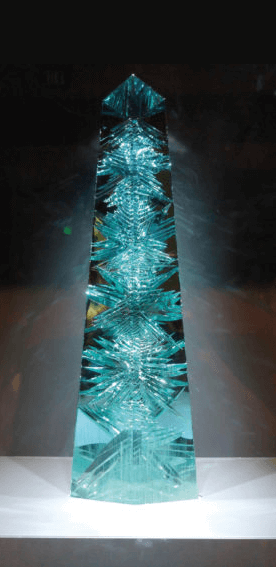
There are many aquamarine deposits across the world. The two main ones are located in Brazil and Pakistan. The former is the largest supplier of aquamarines! Its mines extract imposing crystals with unique reflections every year.
With its 110 kg aquamarine, the mine of Marambaya holds the weight record. The Pedra Azul mine, for its part, yields the purest gem with the Dom Pedro and its 10,363 ct.
Other small operations extract crystals in Angola, China, the United States, India, Namibia, Nigeria, Madagascar, Mozambique, Russia, Zambia and Zimbabwe.
In France, there are a few deposits at Montredon-Labessonnié in the Tarn, in the Montmins mines in the Allier and in La Lande in the Morbihan.
A semi-precious stone difficult to synthesise
Beryl is difficult to synthesise in the laboratory. Using a hydrothermal process, its growth is induced by the dissolution of alumina, beryllium bicarbonate and silica. Adding ferrous and ferric minerals colours the beryl blue, giving it its aquamarine appearance.
Reproducing these extreme conditions of temperature and pressure proves difficult and costly. The industry resorts to this process to synthesise emeralds and bixbites, rare and precious crystals. For aquamarine, however, it prefers natural extraction of aquamarine.
Easy to imitate
On ornamental jewellery, aquamarine is easily replaced. Its colours and reflections are imitated without difficulty. The substitute materials, such as coloured glass, are simple to work with and less costly. By inserting a thin slice of garnet, the brilliance of aquamarine is reproduced to perfection.
When replacing the semi-precious stone, jewellery designers often choose blue topaz. More affordable, it has a similar appearance. Once heated and exposed to gamma rays, it takes on a deep, vivid blue colour.
Rest assured: on French retail sites, the law requires sellers to display the provenance of their stones. They therefore cannot replace an aquamarine with glass or topaz without informing you.
Stay vigilant nonetheless when ordering crystals elsewhere in the world.
Identifying an aquamarine
Faced with all the possible substitutes, it is hard to tell a real aquamarine from a fake. Glass stones can nonetheless be recognised by their low hardness on the Mohs scale. Since aquamarines are more resistant, they scratch materials on which glass has no effect.
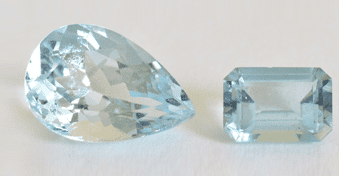
If, on the other hand, your jewel is made of blue topaz, the challenge is greater. Without gemmological skills or equipment, identification proves almost impossible. Only its optical properties of refraction and its density make it possible to distinguish blue topaz from aquamarine.
Modern uses and scientific properties of aquamarine
Whether ornamental or therapeutic, aquamarine is worn as a pendant, a bracelet or a tumbled stone. Jewellers particularly appreciate its shimmer and its intense colours. But like all beryls, this semi-precious stone also has recognised physical properties that are exploited by industry.
The industrial processing of beryllium
Beryllium is a light alkaline-earth metal of a grey colour. In its natural state, it is impossible to find in pure form. It is always combined with aluminates in chrysoberyl, with oxides in bromellite or with phosphate in beryllonite.
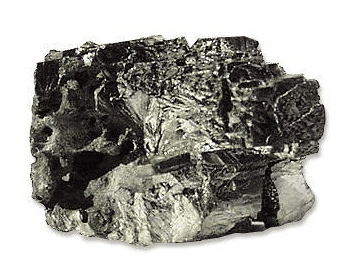
Industry nevertheless favours the use of its silicate-based compound forms : phenakite and beryl.
Aquamarine is thus among the ores used to obtain beryllium. Its poor-quality crystals, unsuitable for jewellery, are processed to extract the precious metal.
Astonishing physical properties
Beryllium has impressive physical properties. Harder than steel, it scratches glass, resists nitric acid, oxidation and is even an excellent thermal conductor.
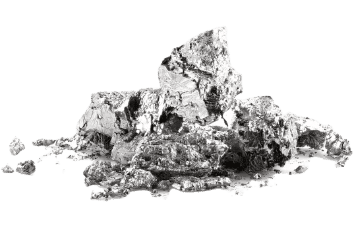
Permeable to X-rays, it propagates neutrons under the effect of alpha particles.
A controlled industrial use
From aeronautics to the nuclear sector, many industrial sectors make use of beryllium. Metallurgists melt it into alloys and use it to create competitive golf clubs or brake callipers for sports cars. As a magnetic and electrical insulator, it is also particularly prized in electronics. Its properties, combined with its thermal conductivity, make it an ideal metal for building high-end loudspeakers.

Toxic to humans in its pure form, the use of beryllium is, however, regulated. Only the nuclear industry uses it without hesitation. For reactors, it represents a remarkable source of long-lived neutrons.
An above all aesthetic use
Aquamarine is sought after most of all in its cut form. Showcased by jewellers, it is used to create magnificent, shimmering and colourful jewellery. After emerald, it remains the most appreciated beryl. Fortunately, it is more affordable.
Aquamarine throughout History
Identified as early as the year 77 AD by Pliny the Elder under the name beryllite, aquamarine runs through the history of Europe. It once held a place of choice among the precious stones thanks to the small deposits on our continent.

It was quickly credited with virtues linked to the sea and the oceans. It made its way into Western and Eastern beliefs. Over time, aquamarine became bound to the intellect, art and imagination.
In Antiquity, the sailors’ stone
From Antiquity, the hues unique to aquamarine associated it with the deities of the sea. On one side of the Ionian Sea, in Athens, it was called beryllos, meaning « colour of seawater ».

On the other, in Rome, it was called aqua marina, « water of the sea ». Peoples associated it with virtues and benefits entirely turned towards the ocean.
In popular belief, aquamarine is nicknamed « the sailor’s stone ». It protects navigators and promises them a serene voyage, free of any storm or shipwreck. If, despite everything, the gods decide to sink the ship, then the stone spares its wearer from drowning.
At the time, the most prestigious jewellers took hold of this stone deemed precious. They engraved it and gave it depth. Using aquamarine, they created finely ornamented intaglios and engravings.
In the Middle Ages, virtues that endure

During the European Middle Ages, aquamarine kept its strong link to the sea. Christian mysticisms nonetheless granted it new virtues. Raised up by Saint John, it became the 8th gate of the heavenly Jerusalem. It thus became a protector and a bringer of good fortune.
In the 13th century, the grimoire of Albertus Magnus cited aquamarine among the magical stones. The author described it as resembling water. He claimed it possessed a power capable of defeating all enemies and winning every lawsuit. According to him, it also stimulates children’s intelligence and improves their learning.
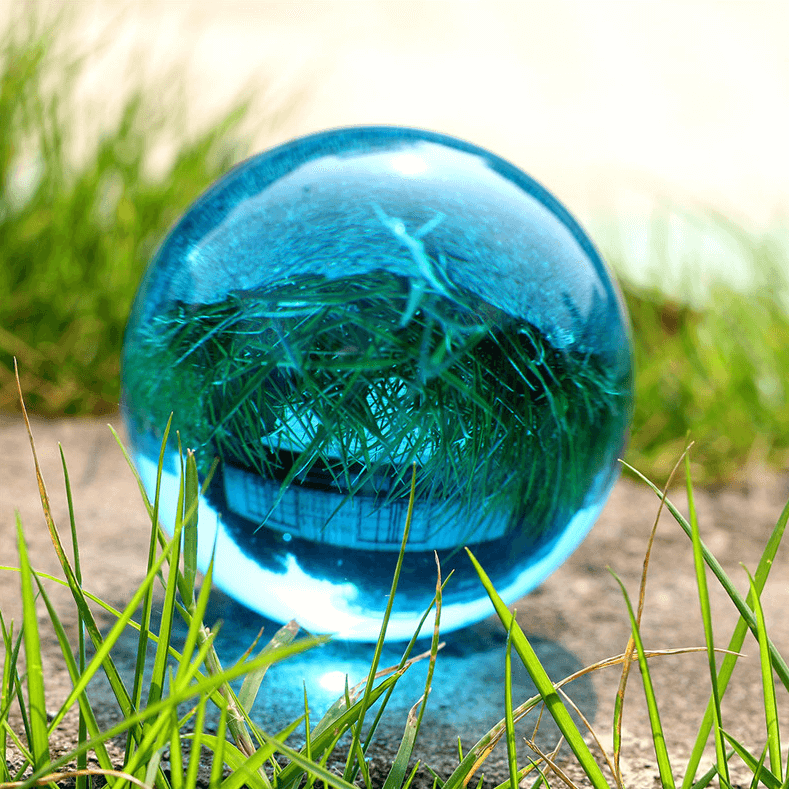
Craftsmen then shaped it into jewellery, but also into translucent crystal balls to support divinatory abilities.
The engraving of Evodus, a true masterpiece
Crafted during Antiquity on an aquamarine, the engraving of Evodus, or intaglio of Julia, perfectly illustrates the craftsmanship of Greek artisans. Reused and adorned with gold in the Carolingian era, the work was set at the top of the Escrain of Charlemagne. The latter held thousands of other precious stones: rubies, pearls, amethysts, garnets, emeralds, sapphires, and so on.
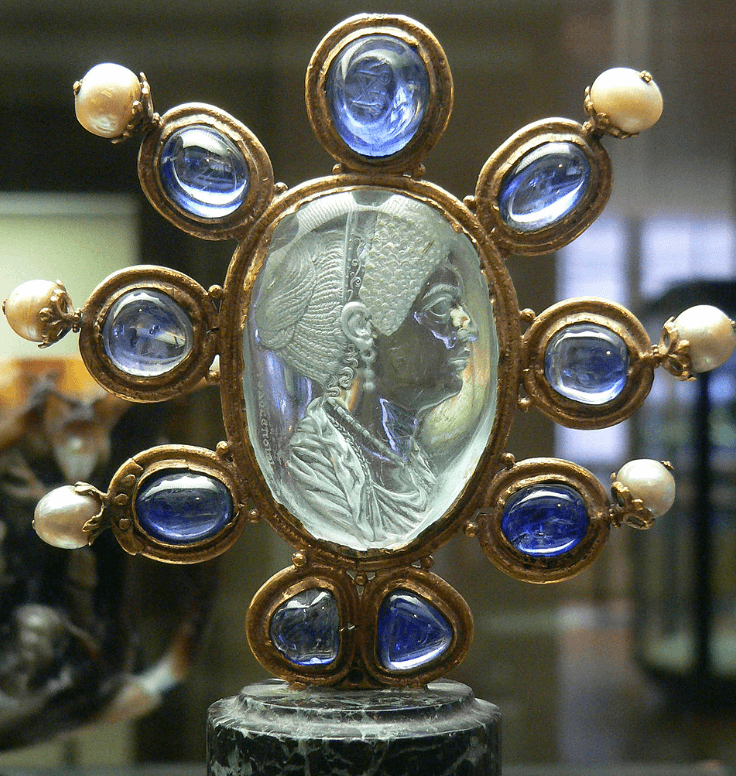
Dismantled in 1794, the engraving of Evodus is the ultimate testimony to this goldsmith’s portico dating from the Middle Ages. It is today on display at the National Library of France.
The spiritual ties of aquamarine
The water stone par excellence, aquamarine possesses powerful virtues and benefits for your body and your mind. Although it is almost absent from Asia, it crossed the continents via overland trade routes and permeated even Buddhist beliefs.

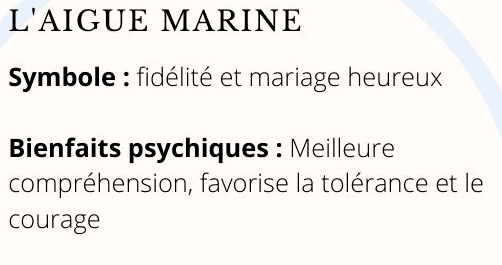
Associated with courage, this stone elevates the soul of its wearer and calms anxiety. It symbolises the beryl wedding anniversary and helps newlyweds look forward to a happy and serene future.
Aquamarine and the Buddhist chakras
Within Buddhist beliefs, aquamarine soothes you and acts on your three bodies.
- It balances your mind, your emotions and your body. Promoting energetic calm, it realigns all of your chakras.
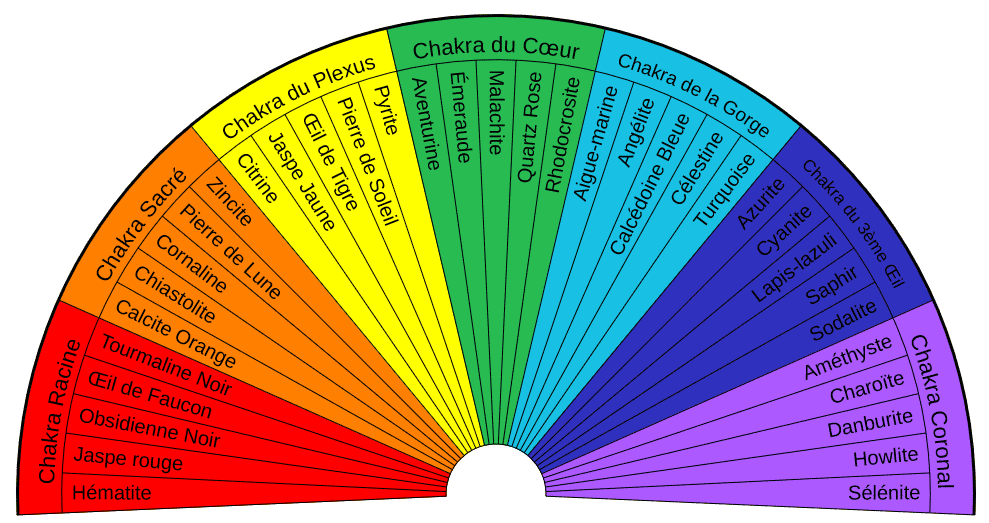
- Aquamarine is especially linked to the 5th chakra: the Throat (Vishuddha).
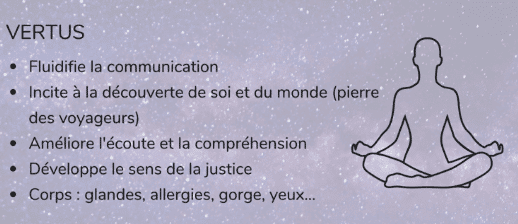
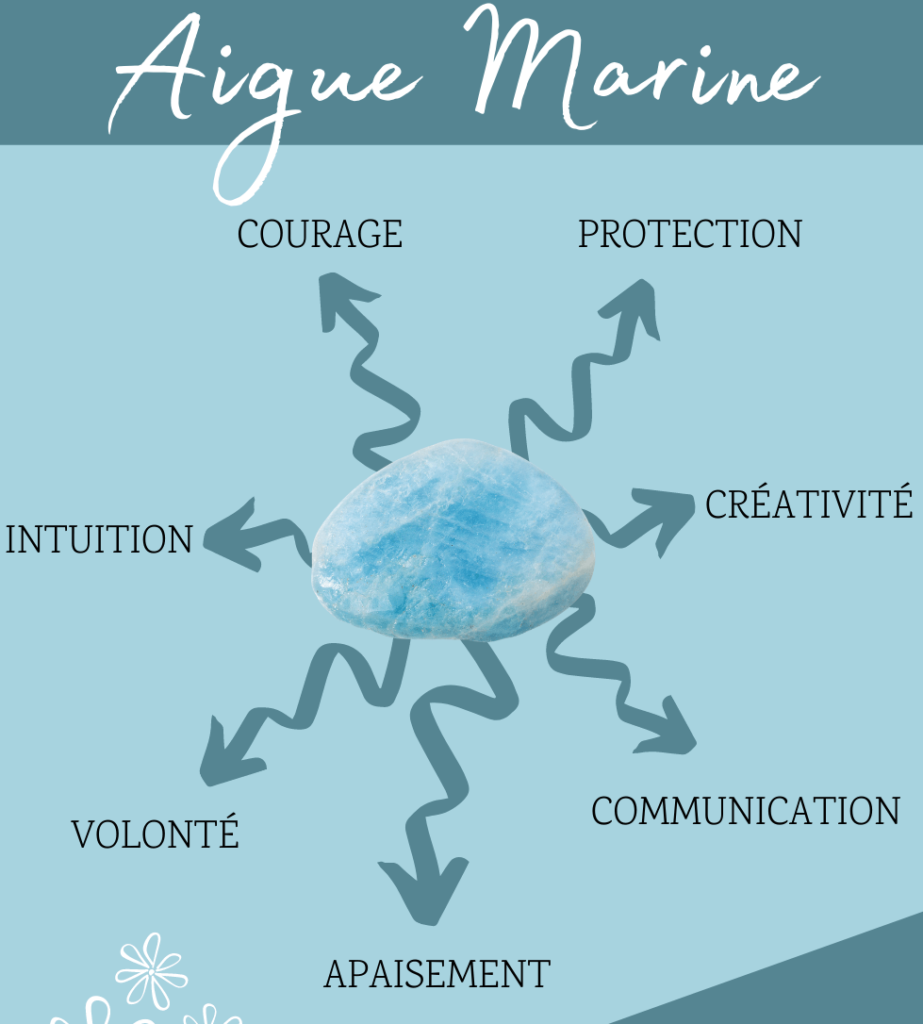
- Associated with self-expression, it develops your listening skills and encourages your openness to others and to the world.
- A stone of courage, it also makes your spoken expression easier. It proves ideal for artists, team leaders or simply the most shy.

Aquamarine and the signs of the zodiac
Aquamarine shines through its purity and its optical properties. From Antiquity, it has been associated with the celestial sea and the signs of the zodiac. It favours above all the creative and intellectual signs :

- the Aquarius. Born between 21 January and 19 February, this air sign benefits from its social, communicative and creative virtues;
- the Pisces. Born between 20 February and 20 March, this water sign benefits from its mystical and soothing properties;
- the Gemini. Born between 22 May and 21 June, this air sign benefits from its intellectual gifts and its help with concentration;
- the Libra. Born between 24 September and 23 October, this air sign opens up better to the world and attains greater harmony thanks to it.
Aquamarine in alternative medicine
So-called alternative medicines support healing using gentle natural methods. So that you may live in harmony with the world, they draw on ancient knowledge accumulated over the centuries.
Semi-precious and precious stones, endowed with a unique energetic potential, hold a central place in these healing processes. They draw in particular on the virtues of aquamarine. Purifying and soothing, it relieves your ailments and supports your spiritual practices.
Feng shui, prevention rather than cure

Valued in China since Antiquity, feng shui purifies your home and the energies that accompany you. It harmonises your living spaces and improves your well-being day to day.
Since it is linked to good fortune, aquamarine promotes the success and prosperity of your family. It finds its place both at home and in your office. Ideally, place it in front of a window. It thus channels the chi, purifies it and disperses it throughout your living space.
Dowsing, the diagnosis of ailments
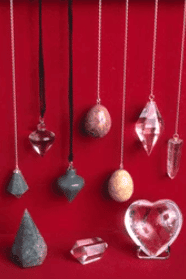
Semi-precious stones channel the impressions of dowsers. They help them to concentrate on the energetic bodies in order to detect radiations and vibrations. With their pendulum and Bovis chart, they reveal the ailments that affect you.
Aquamarine pendulums possess virtues that act on the 7 chakras. They therefore effectively detect your afflictions and are particularly suited to energy healing.
Crystal healing, support for recovery

Alternative medicine, unconventional and complementary, crystal healing results from the accumulation of thousands of years of knowledge drawn from various cultures. It relies on traditions and gently supports your healing. Science acknowledges only a contextual effect in it. However, studies on the subject remain few and fragmentary.
Crystal healing proves above all pragmatic. It uses the vibratory power of semi-precious and precious stones to strengthen the natural healing abilities of your body.
There are many crystal-healing jewellery pieces. Made from excellent-quality semi-precious stones, they benefit from the expertise of craftsmen. Thanks to these bracelets and pendants, you enjoy the benefits of aquamarine every day.
Caution: aquamarine is not a substitute for medical treatment ! Crystal healing, as a gentle medicine, is not intended to replace the prescription of a healthcare professional. Our jewellery is a support, an aid to accompany you in your daily struggles. It only strengthens your natural powers of regeneration. Whatever your conditions or your beliefs, always consult a doctor.
Caring for and revitalising your aquamarine
Over time, the positive energy of your aquamarine tends to diminish. The benefits of your stone are reduced and it accumulates a negative charge. To restore its virtues, a few simple rituals are enough.
Cleansing your aquamarine
Before recharging your aquamarine, always cleanse it. This classic and easy-to-perform ritual purifies it of its negative energies.
Simply immerse it in demineralised water. If you can, add some salt. Thanks to its electrical neutrality, it rids your stone of negative charges more effectively.

If your jewel has a metal setting, it may oxidise. Salt, moreover, worsens this phenomenon. After your purification rituals, always dry your bracelets and pendants properly.
Recharging your aquamarine
Like many semi-precious and precious stones, beryls enjoy the sun. The star’s rays pass without trouble through your aquamarine. Thanks to its optical properties, it absorbs solar energy and recharges.
Simply expose your stone to the light. After a few hours, you will once again enjoy its benefits. If bad weather sets in, place your aquamarine on a positively charged rock crystal.
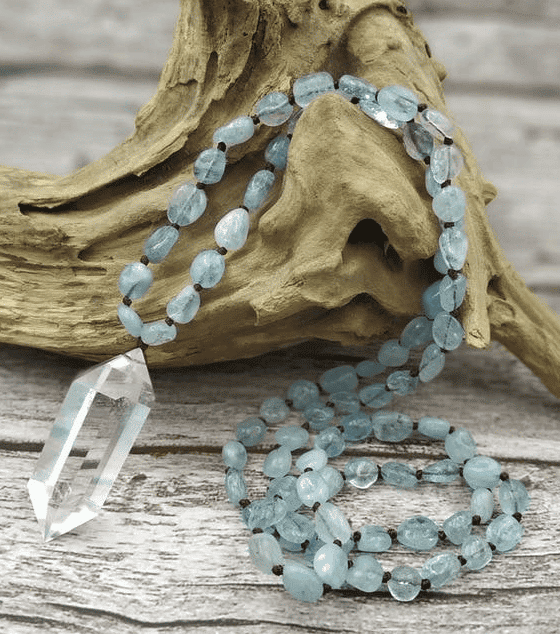
Virtues and benefits of aquamarine
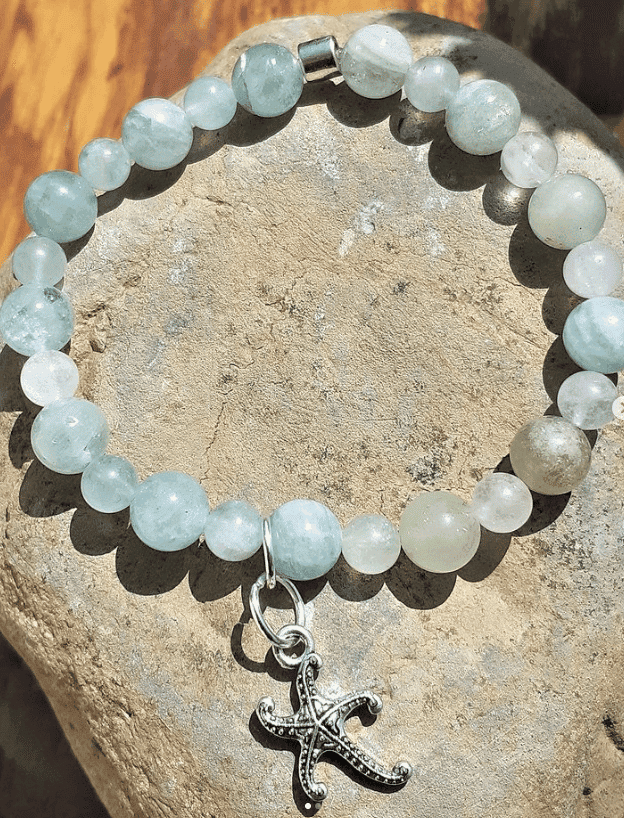
Whatever the era, aquamarine is always associated with the seas and oceans. On the crystal-healing level, it represents a tremendous support during your meditation sessions.
It soothes you and helps you relax. It also improves your communication skills. Pendants and bracelets allow you to enjoy its benefits on a daily basis.
Pairing aquamarine with other semi-precious and precious stones
Semi-precious and precious stones all have their own benefits. By pairing them together, you multiply their properties and virtues. For them to reinforce one another, do not hesitate to assemble them on a bracelet, a mala or a pendant. However, do not pair your stones at random ! Some combine more or less well with others.
Aquamarine pairs well with the crystals that share the same soothing virtues.
- To relax and reduce your stress, pair it with an apophyllite, a rhodonite, a sodalite or a rose quartz.
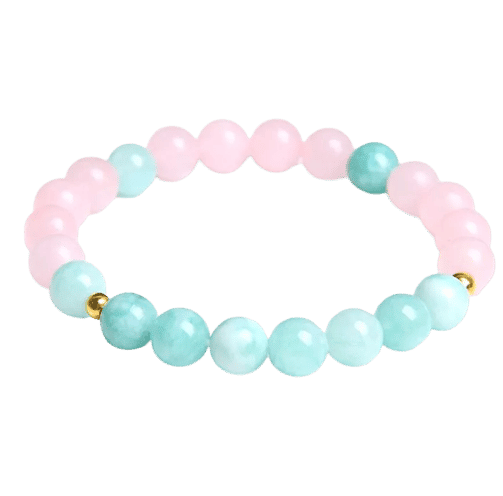
- Are you setting off on a little meditation session ? In that case, pair it with a kyanite, a fluorite or a labradorite.
- If you are instead looking to amplify the energetic virtues of your aquamarine, turn to supporting stones. Moonstone, rock crystal and amethyst fill this role perfectly.
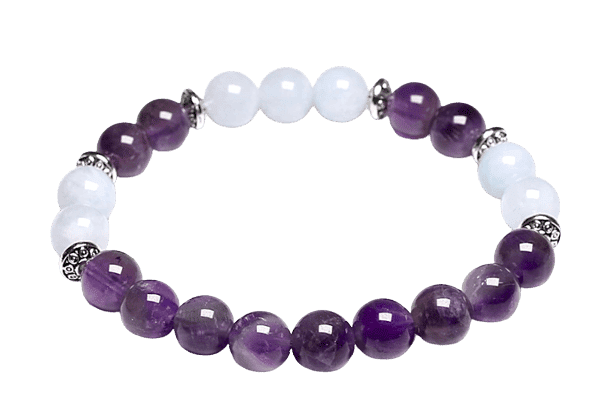
To assemble your crystals together, you can also rely on their shared chakras.
- Aquamarine has affinities with all the stones linked to the Throat, such as celestine or turquoise. Together, their benefits for your communication intensify.
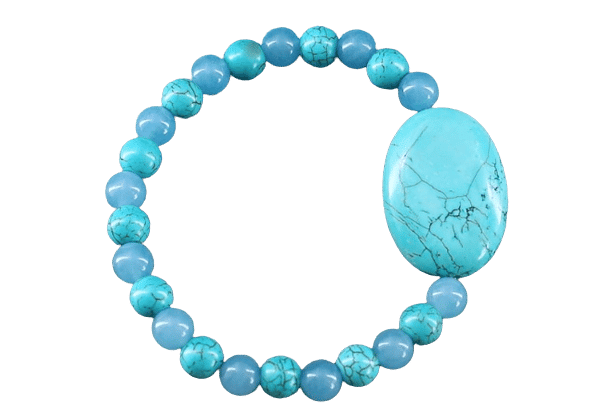
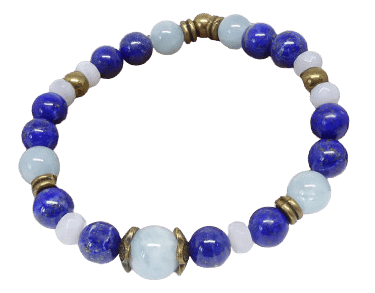
Lastly, an excellent final way to pair stones together rests on colours. Beyond the aesthetic advantages of such an association, stones of similar shades often possess similar virtues and symbolism.
- Aquamarine thus enjoys the company of blue chalcedony, blue calcite, sapphire, blue topaz and lapis lazuli.
The psychological, spiritual and mental virtues of aquamarine

Particularly powerful on the psychic level, aquamarine develops the soul, sensitivity and creativity.
Ideal for artists and entrepreneurs, it supports you in your communication.
On the spiritual level, aquamarine:
- fights against bouts of melancholy;
- calms anxiety;
- eases nervous tension;
- nurtures budding love;
- strengthens existing love;
- increases your tenderness and tolerance;
- reinforces your empathy;
- encourages your openness to others;
- sharpens your perceptions of your surroundings;
- heightens your intellect and improves your ability to study;
- supports your concentration;
- stimulates your imagination and creativity;
- sharpens your sense of responsibility.
The physical and bodily virtues of aquamarine
Since it acts on your three bodies, aquamarine possesses considerable physical virtues. It particularly improves your immune system and your overall fitness. By realigning your chakras, it gives your physical body a fresh energy. On the bodily level, aquamarine:
- tones your body;
- calms your heart rate;
- regulates your circulatory system;
- helps prevent the risks of hypertension and heart conditions;
- strengthens your endocrine glands;
- boosts your body’s immune responses;
- purifies your lymph;
- relieves dental pain;
- combats eye strain;
- wards off nausea;
- promotes your healthy breathing;
- strengthens your throat, larynx, tonsils and vocal cords;
- reduces the risks of allergy;
- soothes skin conditions.
No products found.
You will also like




This page does not contain child posts!
SOMMAIRE