Cartomancy: how to read the cards
The varied worlds of fortune telling have always managed to captivate the crowds, thanks to their spectacular and intriguing nature. Whether practised through the lines of the hand, with a crystal ball, using a pendulum or a deck of cards, the divinatory arts still spark everyone’s curiosity today.
When it comes to cartomancy, there are first of all several card decks with which to hold a prediction session. But above all there is a multitude of card spreads, each one different from the next. Even though they are very varied, they are all divinatory spreads. We will tell you everything you need to know about how to learn Cartomancy.
The origins of card spreads
The earliest traces of playing cards date back a few centuries BC, deep in the heart of India and ancient China. While we know they used them to accompany their dice games, there is no written record proving that they used them for divinatory purposes.
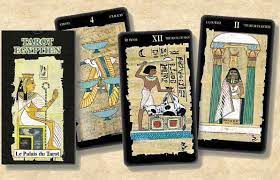
A little later, once playing cards had spread to the Arabian peninsulas thanks to the Silk Road, there is still no proof to confirm that the Egyptians were the first to use them to predict the future. So it was truly in the Middle Ages, just as playing cards had reached 14th-century Europe, that we witness the very first card spreads with a divinatory resonance.
Performed by nomadic Gypsy and Romani fortune tellers, who took ownership of the cards and gave them many highly symbolic meanings, these card spreads were as theatrical as they were intriguing, so much so that they already attracted all kinds of audiences.
And the predictions revealed during these spreads often proved to be accurate, which drove even more people to want to have their cards read. Faced with this unexpected success, it was deep in the heart of Italy that the first tarot card deck was created, with even more esoteric symbolism.
It was therefore from that point on, and from the phenomenal success of the Tarot of Marseille deck, that many card spreads would come into being, to the great delight of an ever-growing number of practitioners and querents.
How to read the cards with a traditional deck?
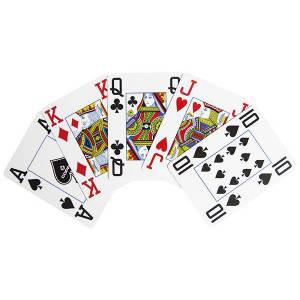
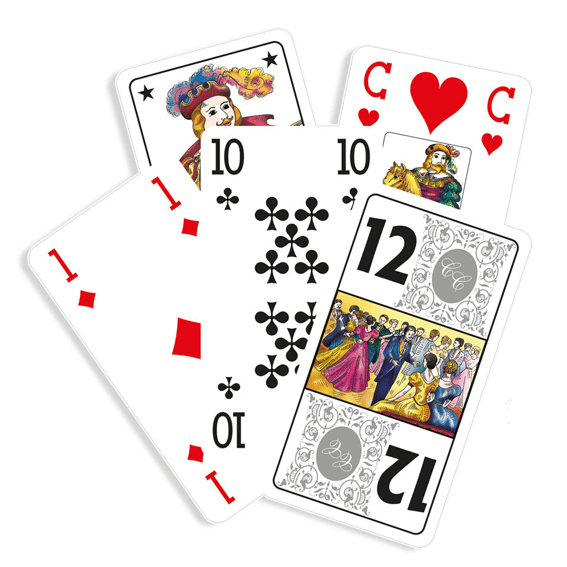
As we still know it today, the traditional deck is made up of 54 cards. It is divided into 2 colours, which are black and red, as well as 4 suits, which are Hearts, Diamonds, Spades and Clubs.
Within each of these suits are the cards numbered from the Ace to the 10, as well as a Jack, a Queen and a King. The last two cards making up this deck are the Jokers.
To carry out a divinatory spread, you set aside these 2 Jokers as well as all the cards from the 2 to the 6, as they are of little interest. You are then left with 32 cards that will prove most revealing.
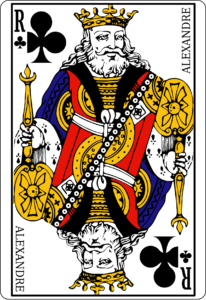
The first step is to single out one of these cards to represent the querent. Note that Hearts represent blond hair, Clubs dark hair, the King a man over 35, the Jack a young man, the Queen a woman over 35, and the 8 if the querent is a young woman.
Next, you must ask the question that calls for an answer, while shuffling the cards skilfully. Cut the deck and set aside the cards underneath, then lay out flat the cards from the top, face down.
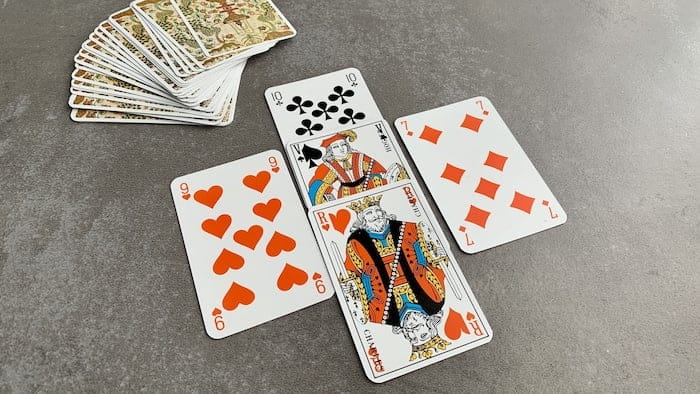
You then need to place the card representing the querent in the centre and turn over the 2 cards on either side of it. The one on the left will foretell an upcoming event and the one on the right the outcome of that event.
How to read the cards of a tarot deck?
Since its creation in the mid-15th century, the tarot deck has undergone a great many changes. While the most famous deck remains the renowned Tarot of Marseille deck, a multitude of other tarots have emerged over time.
These include the Belline Oracle, the Rider Waite tarot, the Mlle Lenormand tarot, the Egyptian tarot, the Persian tarot and the Aleister Crowley tarot, though there are still others.
Each of these tarot decks has its own appearance and number of cards. But they are all endowed with highly meaningful and symbolic arcana in what they represent. And it is very often subjects or values relating to human nature, and to the initiatory journey of a life.
Some decks are more esoteric than others, but they all speak to us of essential values such as love, money, work and health.
All these tarot decks have almost the same spread methods which, thanks to the reading and interpretation of the cards, can reveal to a subject their hidden personality as well as their future.
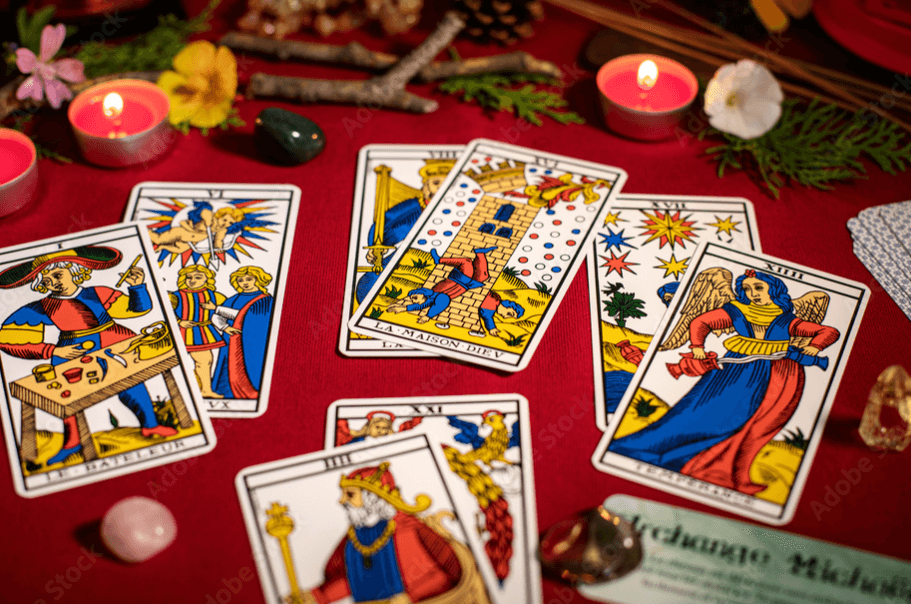
In the case of the Tarot of Marseille, the cards, numbering 78, are divided into 2 parts:
- the 22 major arcana, which are the ones that will reveal the essential information to us,
- and the 56 minor arcana, which will inform us about a multitude of details regarding the personality and the character traits of the querent.
The main methods of divinatory spreads with a tarot deck
The yes-no spread
Simply shuffle the cards by turning them between your hands, then cut to keep only the top part of the deck. You then need to draw 7 arcana from the lot and lay them out. If most of the cards are upright, the answer to the question will be positive. If, on the other hand, most of them are reversed, the answer will be negative.
The 3-card spread
After shuffling and cutting the cards, you will need to draw 3 from the lot and lay them out face down in front of you. Then you need to turn them over from left to right. The one furthest left will give information about the past of the person concerned and about the points in their favour. The one in the middle will embody the present and everything that is unfavourable to them. As for the one on the right, it will offer the answer to the question while taking the first 2 into account, and will reveal information about upcoming events on their path.
The cross spread
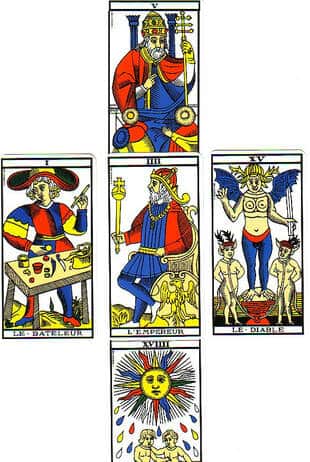
Always shuffle and cut the cards into 2 parts well. You then need to draw 4 cards which will be laid out as follows: the very first will be placed on the left, the second will go on the right, the third will take the top position, and the fourth will be set right at the bottom.
Then draw a fifth card and slip it into the centre of the cross thus obtained on your table. The interpretation of the cards will then be done in order of placement.
Card 1 will tell you about everything that is favourable to the querent. Card 2 about everything that is unfavourable to them. Card 3 will indicate a question asked. Card 4 will bring an answer to that question. Finally, card 5 will provide the synthesis of the spread and offer more detail.
SOMMAIRE