
Properties of Citrine Stone
Citrine is a fine stone from the quartz family. Its hues range from gold to honey. Mined since Antiquity around the shores of the Mediterranean basin, it inherits many virtues in popular beliefs. It indeed lies at the heart of the earliest lithotherapeutic practices.
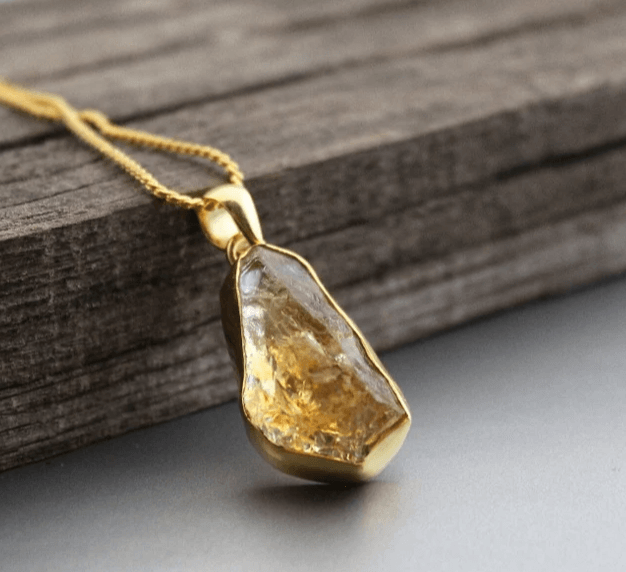
Regarded as the mineral embodiment of the solar force, citrine energizes your body and strengthens your willpower. Wear it as a bracelet or a pendant to enjoy its benefits every day.
In lithotherapy, the citrine stone applies protection to the aura and purifies the body by balancing the energies of the physical body.
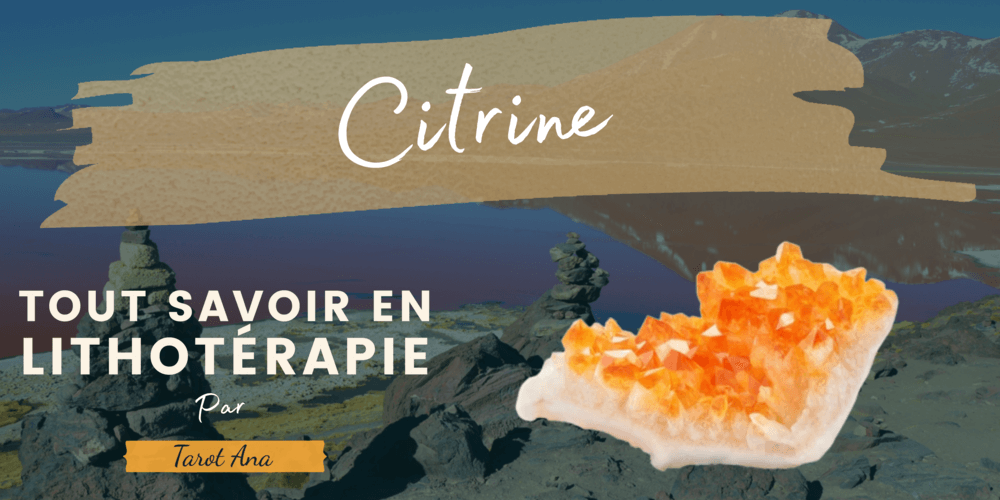
Citrine: its virtues and properties in lithotherapy
| Nom scientifique | Quartz hyalin jaune |
| Lieux d’extraction | Bolivie, Brésil, Colombie, Congo, Inde, Kazakhstan, Madagascar, Mexique, Namibie, Russie, Sri Lanka, USA, Vietnam, Zambie |
| Couleurs | Jaune, orange |
| Chakra | 3me chakra, le Plexus Solaire (Manipura) |
| Signes astrologiques | Bélier, Taureau, Gémeaux, Lion, Vierge |
| Vertus énergétiques | Régénération, renforcement et abondance |
No products found.
Geological formation and characteristics of citrine stone
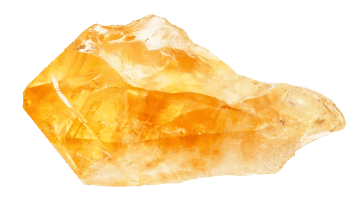

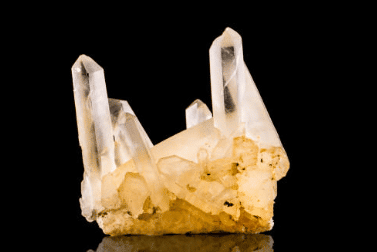
As a single-crystal silicon dioxide formation, citrine ranks among the hyaline quartzes. Like rock crystal, it belongs to the tectosilicate family.
It stands out for its yellow-orange coloration.
Long confused with other stones of similar hues, such as corundum, imperial topaz or agate, it was characterized in the 16th century by the father of modern mineralogy, Georgius Agricola.
The different quartzes
Among the fine stones, the quartz family holds a central place in lithotherapy. It offers a wide variety of benefits, properties and colours. Mineralogists classify them into two categories:
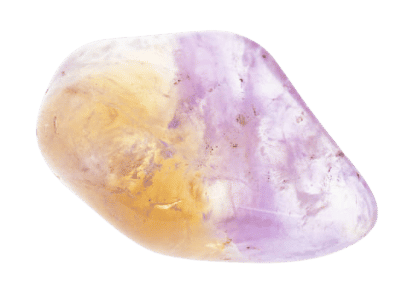
- the single-crystal quartzes. They are recognized by the purity of their composition, and therefore by their unique transparency. They often contain mineral inclusions. Single-crystal quartzes include amethyst, ametrine, rock crystal, rose quartz, hematoid quartz, etc.;
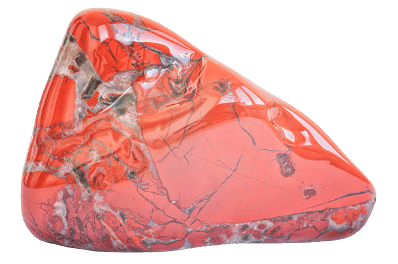
- the polycrystalline quartzes. Their original structure of oxygen and silica becomes enriched with many components. This is why they lose their transparency and gain shimmering colours. Derived from chalcedony, they include agate, carnelian, jasper, heliotrope, onyx, etc.
A common mineral family
Our lithosphere is made up of 12% quartz. This assemblage of silica and oxygen is found in many geological formations. It occurs naturally in common rocks such as granite, sandstone, gneiss, quartzite, etc. Under certain specific geological conditions, quartz retains its purity and takes the form of a gem.
Citrine, a rare formation in its natural state
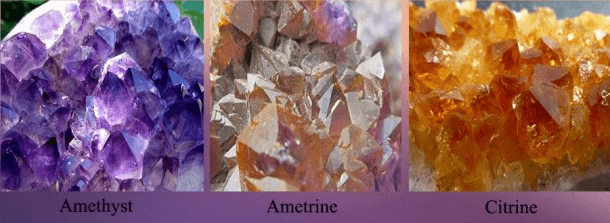
Citrine crystals grow under conditions similar to all hyaline quartzes. They form within basaltic lava flows, pegmatites or Alpine fissures. In these particular geological environments, a rock crystal first absorbs hydrothermal fluids and gradually fills the empty spaces. If iron deposits are present, it takes on a purple hue and becomes an amethyst.
Under certain precise and rare conditions of temperature, pressure and radioactivity, the amethyst gradually changes colour. It turns yellow, while retaining its transparency. It then becomes an ametrine. If the process continues under optimal conditions, the gem takes on its final appearance: a citrine.
Synthesis and recognition of citrine stone
Rare in their natural state, citrines are relatively costly. Most sellers replace them with artificial fine stones. Some even substitute other crystals with similar yellow hues. As for the counterfeiters, they resort to imitations. Distinguishing a natural citrine from a fake thus proves difficult.
Artificial crystals and substitute stones
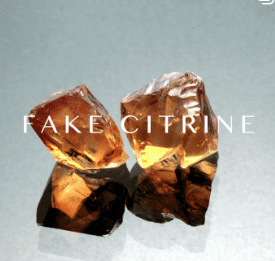
Artificial gems are obtained by irradiating a hyaline quartz or by heating a low-quality amethyst. These smoked and heated citrines look strikingly like the real ones. However, they do not possess the same lithotherapeutic properties and do not provide you with the same benefits.
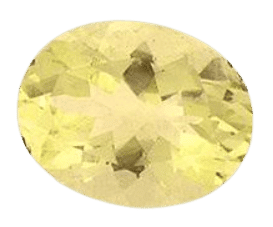
To lower costs, merchants also often replace citrine with a stone of similar hue, such as amblygonite, brazilianite or topaz. The most dishonest opt for imitations made of glass or yellow corundum of synthetic origin.
Recognizing a natural citrine
In France, merchants are required by the regulations in force to inform you of the origin of their fine stones. In theory, the same applies in all the countries that signed the charter of the International Confederation of Jewellery, Silverware, Diamonds, Pearls and Stones (CIBJO). Fraud nonetheless exists, all the more so since a genuine citrine is hard to recognize.
Heated amethysts display numerous impurities: characteristic twinning caused by high temperatures. These synthetic stones often appear dull. Smoked rock crystals, for their part, are more transparent than natural citrines. They lack dichroic refraction.

Telling a citrine apart from another natural yellow stone proves even more difficult. These gems are distinguished only by characteristics that are complex to test : their resistance on the Mohs scale or their value of light refraction. The expertise of a gemmologist is then required.
Extraction and modern use of citrine stone
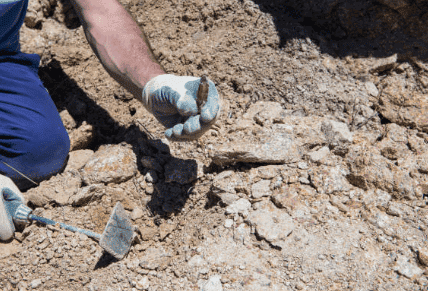
Today, yellow hyaline quartz, or citrine, is mainly used for aesthetic purposes. Present in small quantities in its natural state, it is often mixed with amethyst deposits.
It has numerous deposits around the world, each offering a wide variety of colours and inclusions.
Citrine deposits around the world
Currently, the majority of citrines, whether natural or heated, come from Brazilian deposits. They are also mined in Bolivia, Colombia, the Congo, India, Kazakhstan, Madagascar, Mexico, Namibia, Russia, Sri Lanka, the USA, Vietnam and Zambia.

Properties close to those of rock crystal
Citrine possesses piezoelectric and pyroelectric properties close to those of amethyst. Thanks to its atomic structure, it vibrates in unison with magnetic fields. These properties are essential to the functioning of certain technological objects, such as modern watches. Nevertheless, industry does not use citrine. It prefers synthetic hyaline quartz crystals, which are purer and less costly.
An aesthetic fine stone
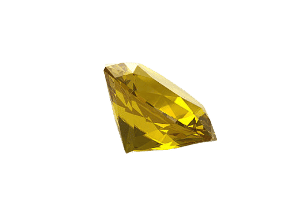
Cut into a gem, citrine is used to create magnificent jewellery cherished around the world.
It is also sought after by lithotherapists for its extraordinary virtues.
Citrine stone throughout History
A solar stone, citrine holds a special place in the history of mankind. However, it is confused with the other yellow stones : imperial topaz, yellow sapphire, corundum, beryl, etc. Imprecise, the ancient sources, myths and legends do not allow citrine to be identified with certainty.
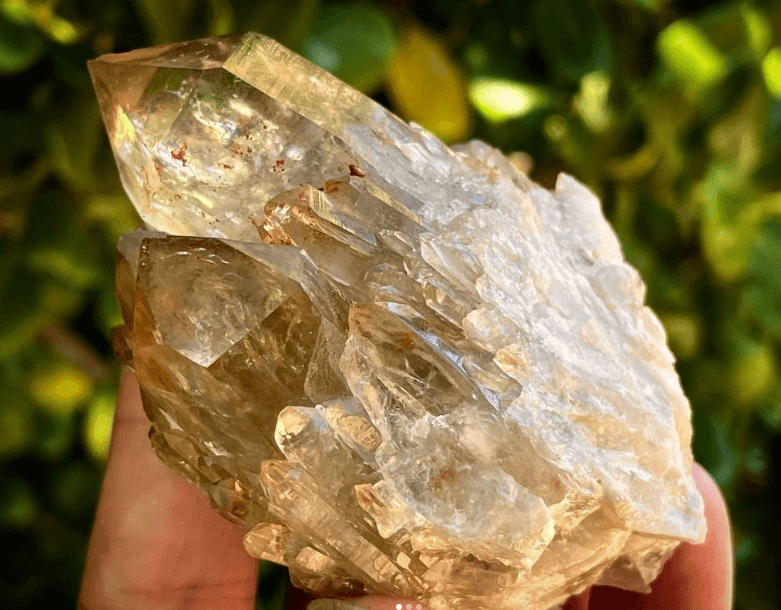
An archaic lithotherapeutic practice in Egypt
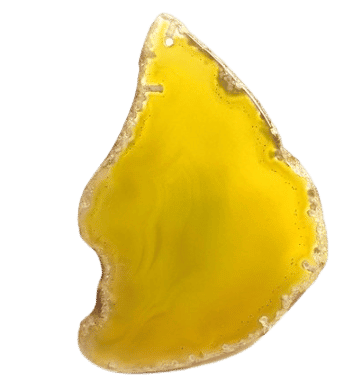
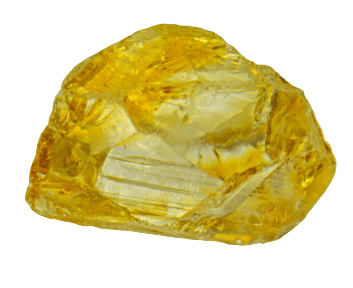
The Egyptian clergy attributed unique virtues to the various stones. With limited geological knowledge, it nonetheless confused them. It ascribed to them similar benefits according to their colours.
Extracted from the mines of Abu Simbel and Aswan, the citrines and the yellow agates thus inherited similar virtues. They healed poisonings from snake venom and soothed pathological jealousy.
The myth of Bastet


To defeat the enemies of Egypt, the solar god, Ra, begot Sekhmet. She was his armed arm and the instrument of his vengeance. In her form as a lioness, she embodied the destructive power of the sun. By bringing disease to his enemies, she personified the wrath of Ra.
In certain myths, the warrior goddess could nonetheless be as gentle as a cat. When she adorned herself with citrines, her anger subsided and she became Bastet. She then represented the warmth of the sun and motherhood, protecting pregnant women and children.
An ornamental stone in Rome and Athens

Among the Romans and the Greeks, citrine remained above all an ornamental stone. They shaped it and set it into the statues of certain deities and great mythological figures.
In Athens, the gem thus often appeared on the representations of Chiron. This mythical centaur, symbol of Sagittarius, was distinguished by his qualities as a physician and tutor.
In Rome, it was associated with Apollo, god of medicine, the sun, divination and the arts.
A symbolic adornment of Israel

As early as the Old Testament, the yellow-orange gem appeared in monotheistic beliefs. Aaron, brother of Moses, wore in Exodus an adornment assembling twelve jewels, representing the twelve tribes of Israel.
Among these stones, the fourth closely resembles a citrine in its description. Some translators, however, see it rather as a yellow beryl.
A long absence in Europe
For nearly a millennium, the yellow hyaline quartz vanished from sight. The sources dried up, the popular beliefs abandoned it.
In the 16th century, George Agricola rediscovered this fine stone. He officially named it citrine, from the Latin citrus, the lemon. Charles X, at the end of the 18th century, restored its noble standing.
A symbol of crowned heads
From the 19th century onwards, citrines flourished on the tiaras of crowned heads.
Queen Victoria was especially fond of them. The important deposits of the Isle of Arran in Scotland supplied her artisans with quality fine stones. She launched a great fashion. Witnesses to its appeal, other royal families, from Luxembourg to Thailand, imitated her and wore adornments set with citrines.

The spiritual links of citrine stone
In all the cultures of the world, citrine is regarded as a solar stone for its shimmer and its yellow-orange colour. Many legends and beliefs are attached to this fine stone. They lend it a mystical aura and ascribe to it spiritual virtues.
Citrine and the beliefs of South America
Citrine is particularly present in the cultures of South America. Some tribes mine it in the Brazilian jungle before selling it to other Amerindians.
According to them, this solar stone is capable of burning and pushing back the limits of warriors. However, with the European conquest, most of these beliefs faded away. A few endure in the form of legends, told near the great citrine mines.
The legend of Anahi

In Brazil, in immemorial times, a sorcerer imprisoned the brightness of dawn in a crystal of purple hues. But the sun took it back from him at once and buried it deep underground. Purified over the centuries, it gradually regained its yellow colour. One day, the crystal rose to the surface. The sorcerer’s descendants, the Ayoreo tribe, found it and hid it.
In the 16th century, a conquistador fell madly in love with princess Anahi. Her people unfortunately did not view the romance favourably. They had the young woman murdered. Dying in the arms of her lover, Anahi then confided to him with a last breath the solar gem, symbol of her eternal love.
The Brazilian miners of the 19th century tell this strange story. They claim to sometimes hear at night the sobs of the conquistador, wandering through the jungle and mourning the woman he loved.
Citrine and the Buddhist chakras
Citrine proves rather absent in Asia. The reason is that there are few workable deposits in its regions. Its yellow-orange hues and its particular brilliance nonetheless associate it with the 3rd chakra, the Solar Plexus, Manipura.

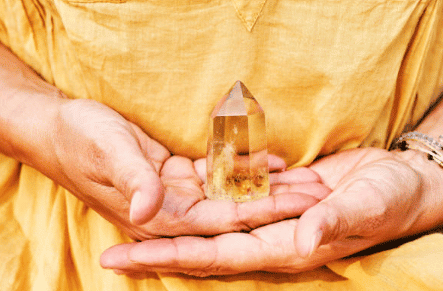
Applied at the base of the sternum, citrine promotes the self-healing of your digestive system. It accelerates your metabolism and strengthens your vital force.
Citrine and the astrological signs
As early as the era of Ancient Greece, citrine was linked to the signs of the zodiac, and especially to Sagittarius. Its correspondences evolved over the centuries. Today, astrologers recommend the use of this fine stone:
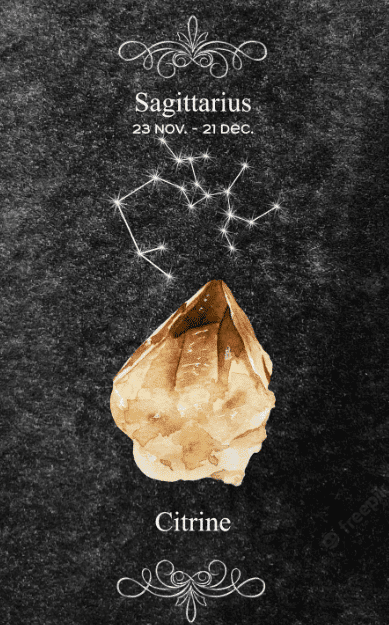
- to Aries. Born between 21 March and 20 April, this fire sign relies on its virtues to calm its jealousy, strengthen its personality and soothe its anger;
- to Taurus. Born between 21 April and 21 May, this earth sign requires a powerful stone to strengthen its vital force and support its headstrong temperament;
- to Gemini. Born between 22 May and 21 June, this air sign improves its powers of concentration thanks to it;
- to Leo. Born between 24 July and 23 August, this fire sign par excellence makes wonderful use of its benefits;
- to Virgo. Born between 24 August and 23 September, this earth sign relies on its strength to overcome its shyness. It also soothes its frequent stomach aches.
Citrine stone in alternative medicine
Today, many people turn to a gentler medicine attuned to the body. Far from convention, alternative practices strengthen your self-healing capacities. They reconnect you to your inner forces and to nature.

The effectiveness of these energy medicines rests on age-old knowledge. Even though science grants them only a contextual effect, millions of practitioners around the world use them to relieve their physical and psychological ailments.
Feng shui: guide the energy flows of your living spaces

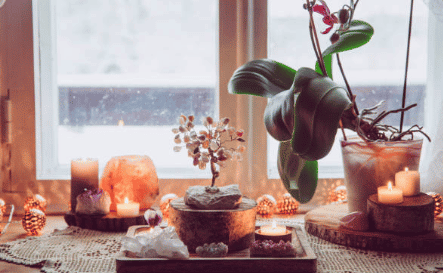
The quest for inner harmony begins outside of you. To purify yourself, feng shui proposes that you put your home back in order. By arranging your furniture and belongings in a precise way, you attract luck, success and improve your well-being.
In China, the masters of the discipline consider citrine to be a powerful earth gem. In your living spaces, it catalyses the surrounding energy and brings you wealth. Ideally placed, it ensures you abundance and promotes your longevity.
Dowsing: detect the ailments that affect you
Healing rests in part on the recognition of pathologies. To diagnose your conditions, dowsing relies on the power of fine and precious stones. Practitioners, equipped with a pendulum and a Bovis board, detect and interpret the vibrations of your body.
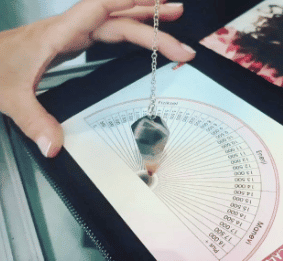
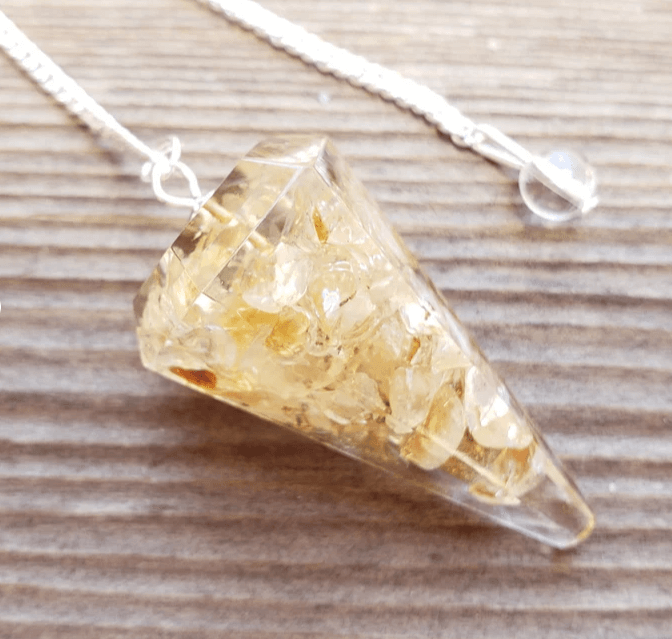
Pendulums fashioned from citrine possess a neutral energy. They prove less sensitive to parasitic energies. Like those made of amethyst, they particularly support beginner dowsers.
Lithotherapy: strengthen your healing capacities
Lithotherapy rests on age-old knowledge. Man has drawn on the vibratory capacities of stones since Prehistory! To accelerate your recovery, turn to citrine. It strengthens your self-healing capacities.
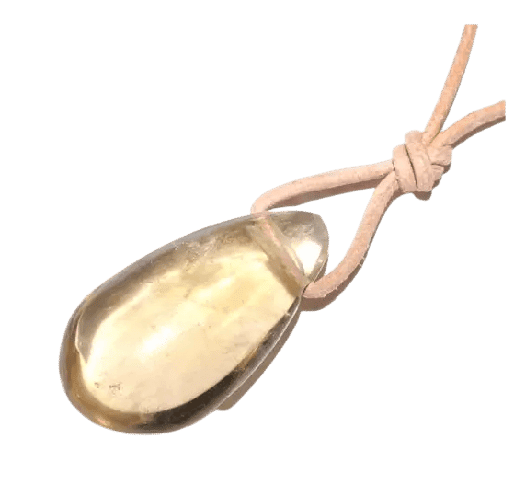
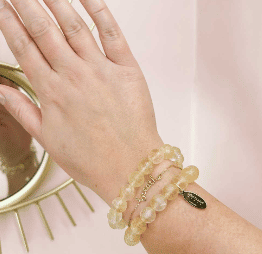
Many artisans craft pendants and bracelets suited to lithotherapeutic practice. They select for you quality fine stones and create jewellery as aesthetic as it is effective on the energy plane.
Warning: the virtues and benefits of stones belong to belief and tradition! Our jewellery in no way replaces medical advice. Citrine bracelets and pendants only support your natural healing capacities and accompany you in your convalescence. They never substitute for a treatment prescribed by a healthcare professional.
Caring for and revitalizing your citrine stone
To vibrate and bring you all their benefits every day, fine stones draw on the energy stored over their centuries of formation. In contact with you, they gradually discharge, lose their positive energies and become charged with bad waves. To maintain the full potential of your citrine, care for it regularly through simple rituals.
Purifying your citrine
When the energy of your citrine becomes polluted, it turns dull and its lithotherapeutic effectiveness diminishes.
To purify your stone of the accumulated negative energies, clean it with a soft cloth, without any abrasive substance.
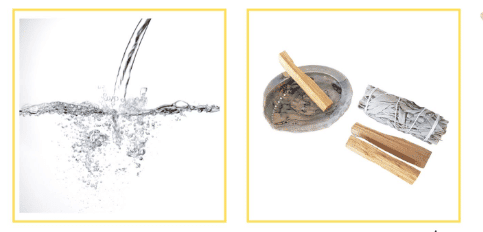
Then let it rest a whole night in a glass of spring water. Short on time? Then hold it under a trickle of running water for a quarter of an hour.
If your citrine rests on a metal support, take care that it does not oxidize! Always dry your jewellery properly.
Recharging your citrine
Although it is linked to the sun, citrine tolerates its rays poorly. By exposing it to overly bright light, you risk dulling it.
To recharge your stone, therefore favour the solar rays of dawn or safely turn to those of the moon.

You may also bury it in the ground for several weeks. You will thus restore its full potential to it. Warning: if you choose this method, carefully note its location so as not to lose it.
Virtues and benefits of citrine stone
Worn as a pendant or a bracelet, citrine gives you various physical and psychological benefits.
It acts on your body’s dynamism and develops your positive energies.
However, it remains above all a spiritual stone.
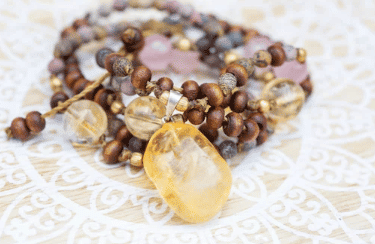
Its solar power calms your mind and strengthens your powers of expression. Particularly suited to introverts, it improves your self-confidence and helps you to take initiative.
The pairing of citrine with other fine and precious stones
To amplify the virtues of your favourite stones, do not hesitate to combine them with one another. Compatible crystals, worn together, resonate all the more. While some combinations are to be avoided, others promise you incredible effects.
- Do you want your citrine to support you during your meditations ? Then combine it with gems linked to the 3rd chakra. Favour yellow jade, tiger’s eye or sulphur.
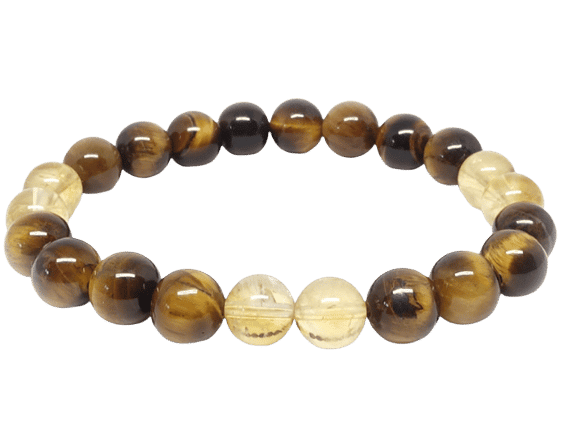
- For a combination both aesthetic and effective on the energy level, instead choose your stones according to their colours. Crystals of the same hues often share common benefits. To multiply the effects of your citrine, pair it with amber, hessonite, serpentine, imperial topaz, pyrite or andalusite.
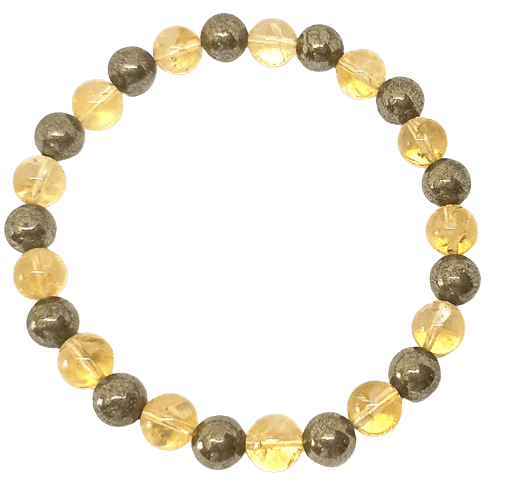
Note that the most powerful pairings rest on the virtues of the stones themselves.
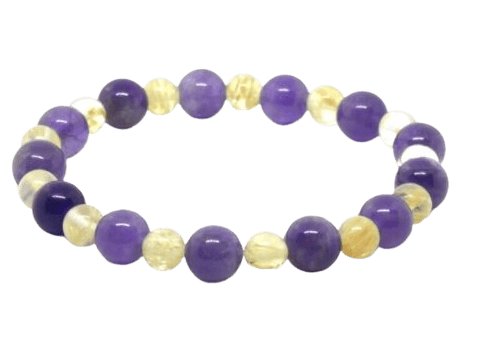
- Thus, since it is soothing and stimulating, citrine has great affinities with peridot, amethyst, agate, rose quartz, howlite and lapis lazuli.
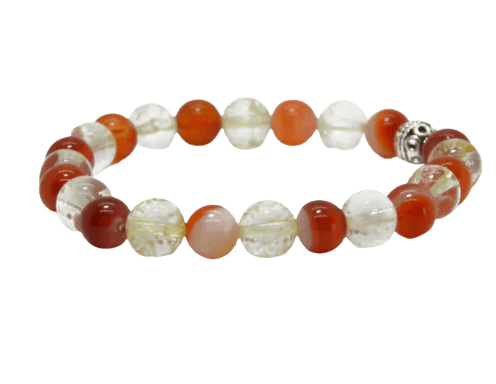
- To amplify its solar benefits, pair it with a carnelian, a calcite, a garnet, a jasper or a sunstone.
The psychological, spiritual and mental virtues of citrine
A solar stone par excellence, citrine strengthens your mind and your willpower. It promotes a positive attitude and re-energizes bogged-down spirits. On the psychological plane, it:
- reduces worries;
- fights stress;
- counters depressive states;
- drives away sadness;
- balances positive and negative energies;
- offers you a positive vision of the future;
- improves your self-confidence;
- develops your self-esteem;
- reassures the shyest;
- stimulates your ability to take initiative;
- helps you make decisions;
- protects you in the face of criticism;
- promotes healthy social relationships;
- attracts wealth and prosperity;
- encourages you towards generosity;
- increases your chances of everyday success;
- fosters your inspiration;
- stimulates your creativity;
- sharpens your concentration;
- develops your faculties of understanding;
- supports you in your studies.
The physical and bodily virtues of citrine
Citrine acts positively on your body. Its solar warmth strengthens your regeneration capacities and improves your blood circulation. On the physical plane, it:

- energizes your body;
- fortifies your energy;
- strengthens your metabolism;
- stimulates your digestive system;
- smooths your intestinal transit;
- reduces stomach acidity;
- soothes nausea;
- fights intoxications and poisonings;
- strengthens your heart;
- regenerates your damaged tissues;
- accelerates self-healing processes.
No products found.
You will also like




This page does not contain child posts!
SOMMAIRE