
Virtues of the Obsidian Stone
Born in the heart of volcanoes, obsidian holds the strength of flames, earth and water. Defined by its glassy appearance and its deep darkness, it fascinates as much as it unsettles. People have worked it since Prehistory.
Volcanic glass is easy to carve and offers a precise cutting edge. Long used for practical purposes, it played an artistic role from Antiquity onward. The various civilisations attributed magical and therapeutic virtues to it. In crystal healing, it grew in popularity and became a powerful protective stone.
Obsidian: its virtues and properties in crystal healing
| Nom scientifique | Obsidienne |
| Lieux d’extraction | Arménie, Espagne, États-Unis, France, Grèce, Italie, Islande, Japon, Kenya, Turquie |
| Couleurs | Gris, noir, vert, marron, rouge, avec parfois des taches blanches |
| Chakras | Racine (Muladhara), 3me Œil (Ajna) |
| Signes astrologiques | Capricorne, Sagittaire, Scorpion |
| Vertus énergétiques | Protection et vitalité |
Geological composition and formation of the obsidian stone

An effusive volcanic rock, obsidian forms at the surface. While most varieties belong to the rhyolite group, there are phonolitic (alkali-rich), trachytic and dacitic volcanic glasses.
Each of these families has different shapes and colours, set during the polymerisation process.
No products found.
A unique composition
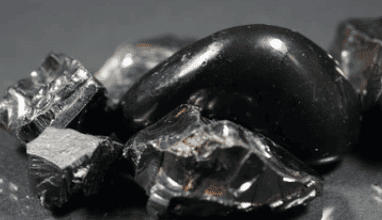
Opaque or translucent, obsidian stands apart from other surface volcanic rocks by its glassy appearance. The rhyolitic volcanic glass, the most common, is made mainly of silica (70 to 75% of its mass).
Depending on the minerals present in the final blend, it offers a vast range of varieties, colours and inner reflections.
The formation of obsidian
Volcanic glass appears when molten magma cools. For obsidian to form, a silica-rich, viscous and acidic surface lava must undergo a quenching process. Its rapid cooling prevents crystallisation. It triggers strong polymerisation. The liquid solidifies into a glassy rock which, depending on the mineral composition of the mix, displays different colours and patches.
Distinctive hues
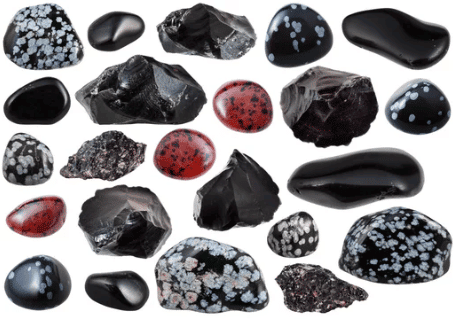
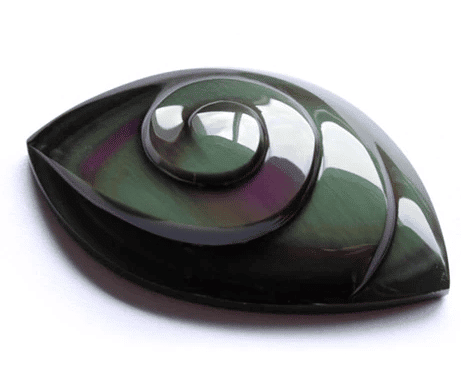
Obsidian changes colour according to its composition. The presence of hematite gives it red or brown tones, that of chromium a dark green shade. When it contains tubular microlites, the rock shows colourful prismatic reflections. Known as celestial eye or rainbow, this unique variety is highly sought after in crystal healing.
Striking patches
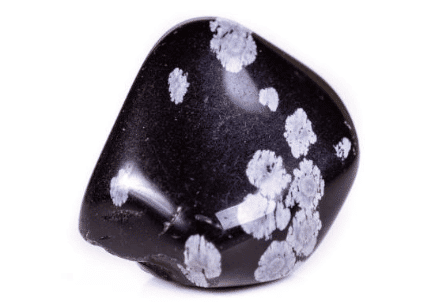
Some obsidians display coloured patches. They result from the partial recrystallisation of the volcanic glass. Spherulites and cristobalites then form and speckle the black stone. The snowflake variety is no doubt the best known.
A debated etymology

The origin of the name obsidian is genuinely controversial.
As early as Roman times, Pliny the Elder claimed it took its root in the name of a soldier: Obsius.
Legend credits him with the discovery of volcanic glass in Ethiopia. Although a man of that name does seem to have lived among the African legions of the Roman Empire, this etymology appears doubtful.
The linguistic hypothesis rather supports a construction around the Latin word obsidio, meaning “surrounded”. Its supporters observe the fractures of obsidian, similar to rings.
Extraction and uses of the obsidian stone
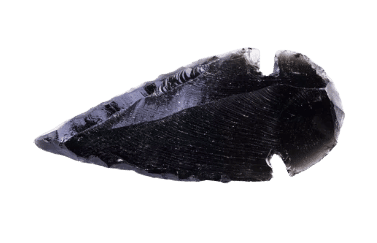
Obsidian has accompanied humankind since Prehistory. Its unrivalled sharpness and its sturdiness explain its popularity.
Still used today, volcanic glass is mined at the foot of many volcanoes on our planet.
Mining sites around volcanoes
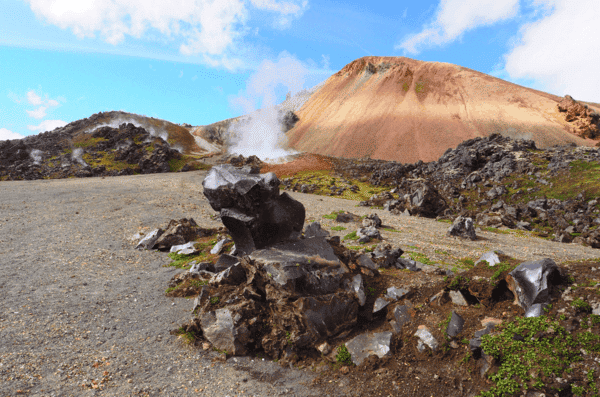
Born of volcanic flows rich in silica, obsidians abound around volcanoes. The main deposits lie in Armenia, Spain, the United States, France, Greece, Italy, Iceland, Japan, Kenya and Turkey.
An ideal tool
Obsidian proves easy to carve thanks to its conchoidal fracture line. In Europe, it replaced iron until Antiquity, and even later in America.
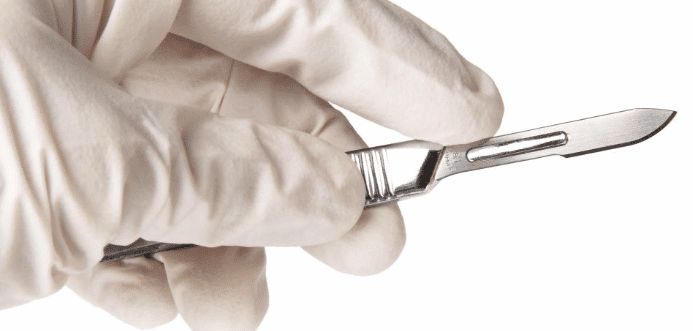
The peoples who mined the black stone, such as the Greeks on the island of Milos, made a real fortune from it. Today, during precision operations, experienced surgeons still use volcanic glass blades.
Decorative craftsmanship
From Antiquity onward, European artists turned obsidian into a work of art.
Its glassy appearance and the depth of its colours fascinated them. It polishes easily and has a unique clarity. Nowadays, thanks to its magnificent varieties and to its crystal-healing virtues, it still draws the Western public.
The obsidian stone in Western and Eastern history
In the West and the East, obsidian plays an aesthetic and practical role. Blending physical properties and magical virtues, it has been mined since Prehistory.
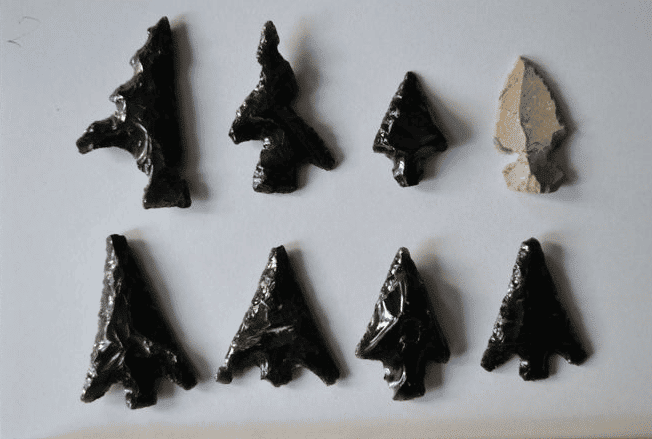
Peoples the world over shape it into tools and decorative objects. While they attribute few benefits to it, its ritual use remains notable.
A worldwide prehistoric use
The use of obsidian dates back to the Palaeolithic. Around 300,000 years before our era, our ancestors were already crafting the first obsidian tools, in Kenya, in the Great Rift Valley.
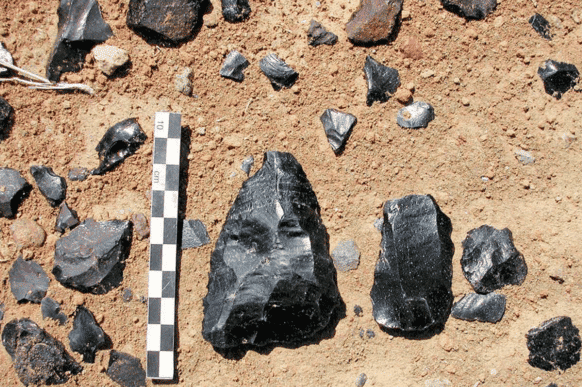
From 40,000 years before our era, the precious volcanic glass was mined across the entire surface of the globe. The exploited deposits proved numerous: Mexico, Guatemala, Romania, Yemen, Turkey, Mesopotamia, Egypt, Japan, and so on.
Craftsmanship as a source of wealth
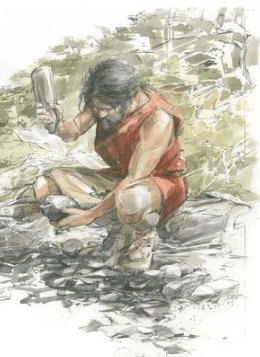
Obsidian gave rise to trade networks across Europe.
The itinerant cutter-craftsmen collected rough blocks (cores) of it from the miners of southern France.
They transported and shaped them to order, adapting to the needs of the villages they met along the way.
A sturdy and reliable material
From knives to arrows, people created precise and solid tools from the black stone. It replaced flint. They also used it during the most delicate surgical operations, such as circumcision or trepanation.
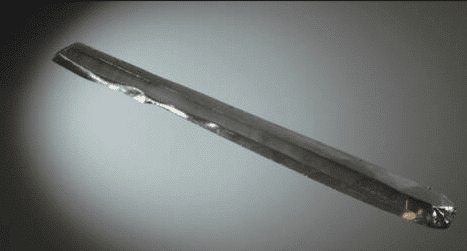
Archaeological research attests to the effectiveness of the procedure: two-thirds of patients are said to have survived it!
An Egyptian decorative art
Heirs to the distant prehistoric cultures, the Egyptians worked obsidian. They valued its unique sharpness and in turn used it as a surgical tool.
The black stone became above all decorative. The craftsmen of the great dynasties fashioned ritual and decorative objects from volcanic glass.
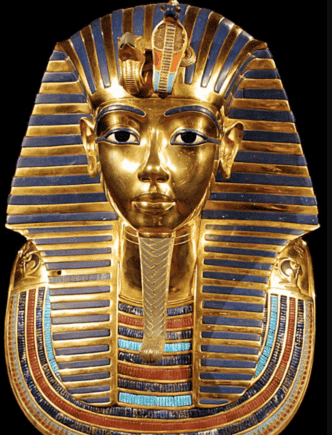
The mask of Tutankhamun, whose eyes are adorned with obsidian, bears witness to this age-old craftsmanship.
Affordable imitations in Rome
The Romans placed great value on obsidian, which they imported from Ethiopia and India. The Latin aristocracy fought over it. Faced with growing demand, craftsmen coloured glass and created the first imitations. They made vases and ornamental tableware.
Emperors under its spell

Pliny recounts in his work, Naturalis Historia, the emperors’ love of obsidian. He mentions the existence of giant statues of Augustus and states that four elephants carved from the black stone adorn the Temple of Concord.
He even mentions the gift that Tiberius made to the Heliopolitans: a statue of Menelaus in volcanic glass.
The cult of mysteries in Antiquity and the Middle Ages
From Antiquity onward, obsidian became part of occult practices.
The Book of the Cyranides bears witness to this. Written between the 5th and 7th centuries by a Byzantine monk, this book of magic contains esoteric lapidaries and bestiaries.
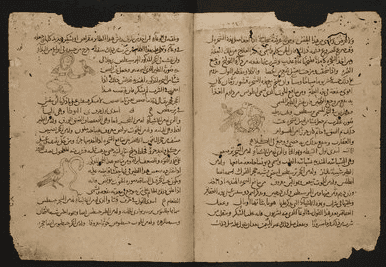
It compiles a great many of the beliefs of Antiquity coming from the Chaldean, Egyptian, Greek and Christian peoples.
Obsidian was then called the cinaedia stone and placed under the influence of Saturn. Orthodox clergy were wary of mirror obsidian, which they called the serpent’s stone.
Black mirrors
By polishing obsidian, craftsmen obtained a mirror. Every object is reflected darkened in it. While painters appreciated the dark allure of these images, the religious beliefs of the Middle Ages banned this maleficent object.
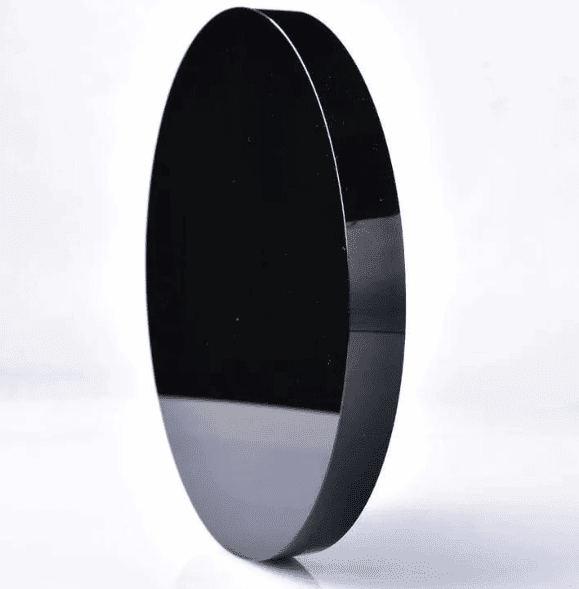
In the famous tale of Snow White, the queen’s mirror is in fact made of obsidian.
The skies of the Renaissance
The obsidian of Mount Hekla has a satin black of unique purity.

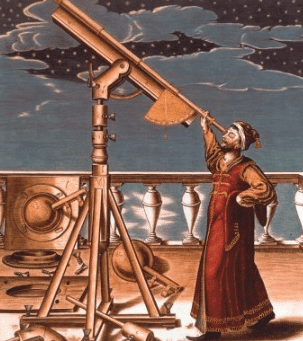
In the Renaissance this variety received the name black agate of Iceland. Carefully polished, it became a mirror of incredible clarity. Scholars moved away from superstition to fit it into their telescopes. It reflects the night skies with precision.
The revival of occultism
With the 16th century began the age of discovery. The conquistadors brought back many legends about obsidian from America. Inspired by these tales of the pre-Hispanic peoples, European occultists once again seized upon volcanic glass.
For his rituals, the famous English alchemist John Dee used a mirror with dark reflections.

A problem of definition

While obsidian was distinguished from jet in Antiquity, it became confused with it during the Middle Ages and the Renaissance.

Georgius Agricola, father of mineralogy, took part in this confusion. Other specialists, such as Anselmus Boetius de Boodt or Andrea Cesalpino, saw in it only a variety of agate or black marble.
The Count of Caylus finally settled the question in 1760. He defined it as a volcanic rock similar to gallinace stone, the name given to obsidian in America.
The obsidian stone in Mesoamerican history
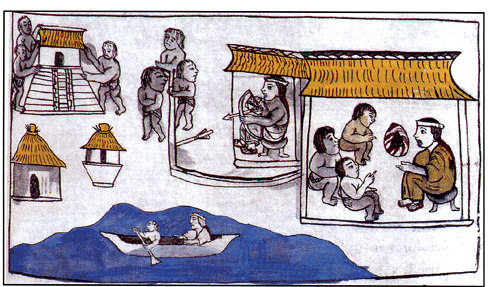
The pre-Hispanic peoples of South America attributed unique magical virtues to obsidian. Until the arrival of the conquistadors, they used it in their rituals.
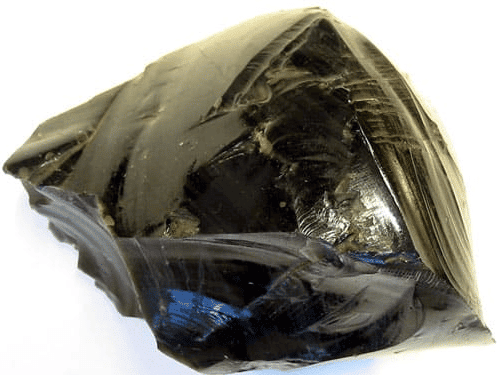
The black stone, which they named itztli, structured all of their societies and shaped their history.
Intense extraction and trade
Obsidian proves common in Central America. The Mesoamericans exploited abundant deposits in the lands of Mexico and Guatemala. The trade routes carried the rock southward. They supplied the entire subcontinent with a high-quality prismatic black variety.
A marked lithic industry
In America, obsidian replaced iron. Extracted and split into cores, it is easy to carve. The Mesoamericans developed precise techniques to produce volcanic glass blades. They proved extremely sharp and sturdy.
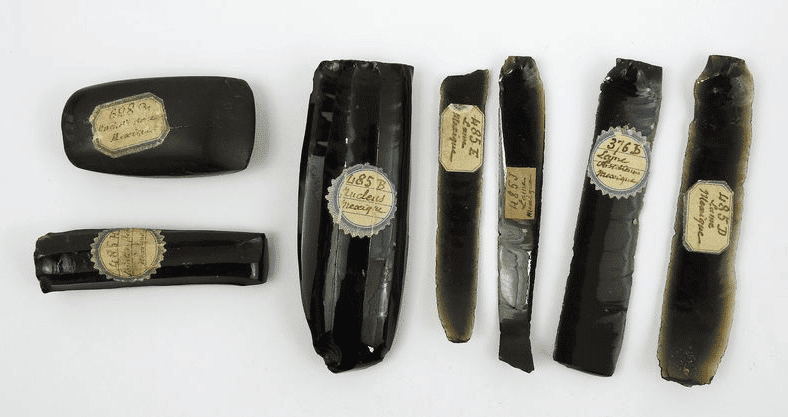
These stone tools are found across every continent. Their abundance, their lightness for transport and their effectiveness explain the absence of a metallurgical industry in the pre-Hispanic cultures.
Ritual sacrifices and self-mutilations
The Mesoamerican civilisations saw in obsidian the crystallisation of the earth’s blood. They believed in its virtues that strengthened the powers of regeneration and healing.
Also renowned for its sharpness, the Mesoamericans used it in self-sacrifice rituals. In tribute to the deities, the nobles cut off part of their body to draw their own blood.
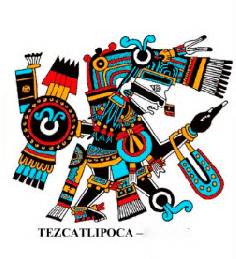
The Aztecs associated volcanic glass with the god Tezcatlipoca. Their craftsmen polished it and shaped it into a black mirror with a dark reflection. They attributed powerful divinatory powers to it.
Volcanic glass and Mesoamerican art
Across the entire subcontinent, Mesoamerican art bears witness to the cultural importance of obsidian.
Because it is associated with warrior rituals, the region’s sculptors and painters often depicted equipment made of black stone. The ceremonial weapons, used in processions, were thus adorned with blades of prismatic rock.
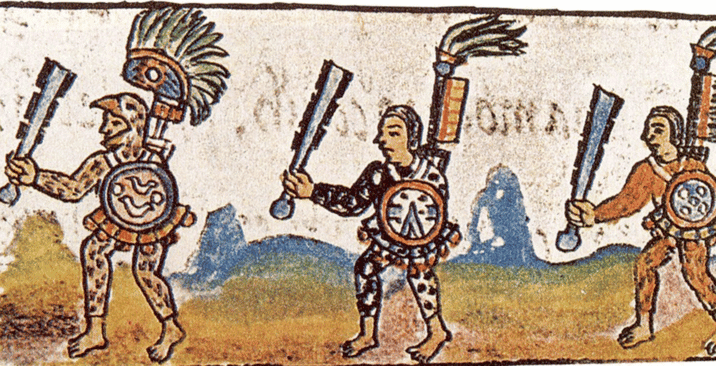
A funerary use
In the Mesoamerican tombs, archaeologists discover a wide variety of obsidian objects. The noble burials contain tools, weapons, works of art and funerary masks made from volcanic glass.
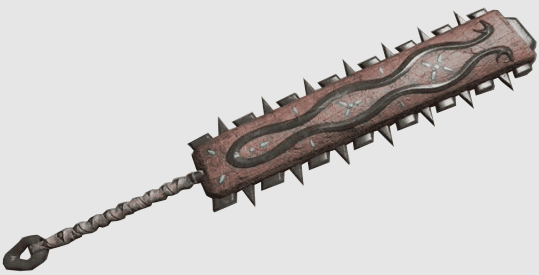
The presence of flakes and deified stelae attests to a marked religious use.
The spiritual ties of the obsidian stone
Obsidian belongs to many esoteric schools of thought. The various traditions associate it with diverse rites and practices. By integrating volcanic glass into their belief systems, they link it to the energies of humankind and to the celestial bodies.
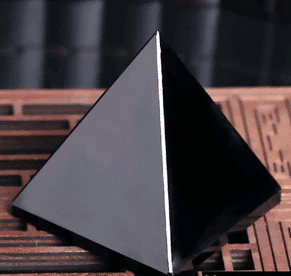
Obsidian and the Buddhist chakras
The black stone is rare in the cultures of Asia. Only Japanese society, with deposits exploited since Prehistory, uses it. Nevertheless, with the gradual expansion of Buddhism across the continent, the monks eventually incorporated volcanic glass into their worship. They associate it with:
- the 1st chakra, the Root (Muladhara) . Placed on this point during meditation, obsidian improves your stability and your sense of security. Its belonging to the earthly forces ensures your well-being and the harmony of your energies;
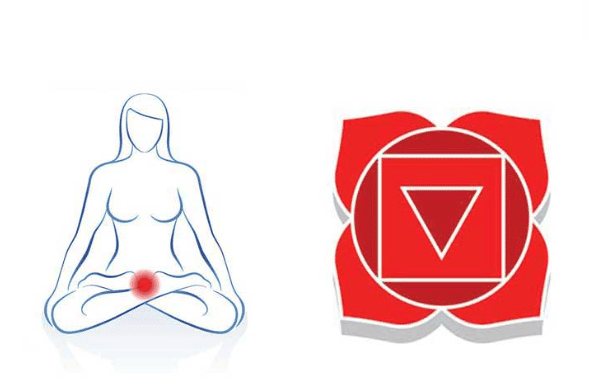
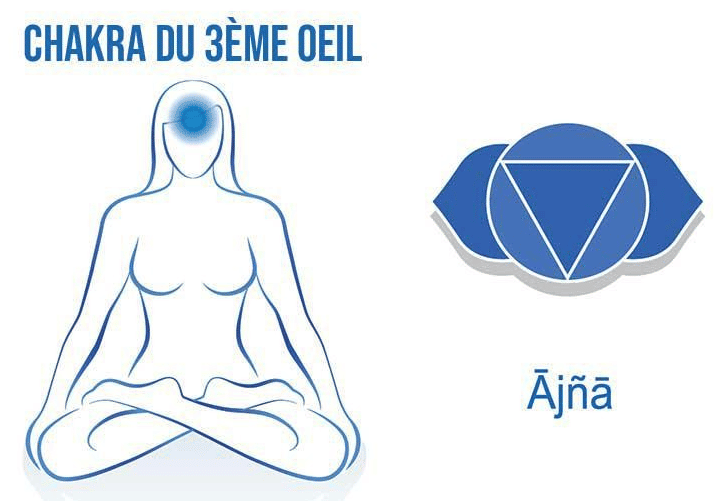
- the 6th chakra, the Third Eye (Ajna) . Positioned on this energy point, the stone develops your imagination and your powers of anticipation. It eases introspection and amplifies states of contemplation.
Obsidian and the astrological signs
Mined since Prehistory, obsidian marks all of the European occult traditions. Its deep blackness recalls the night sky. It marks its affinity with the celestial powers. Its signs of choice are:
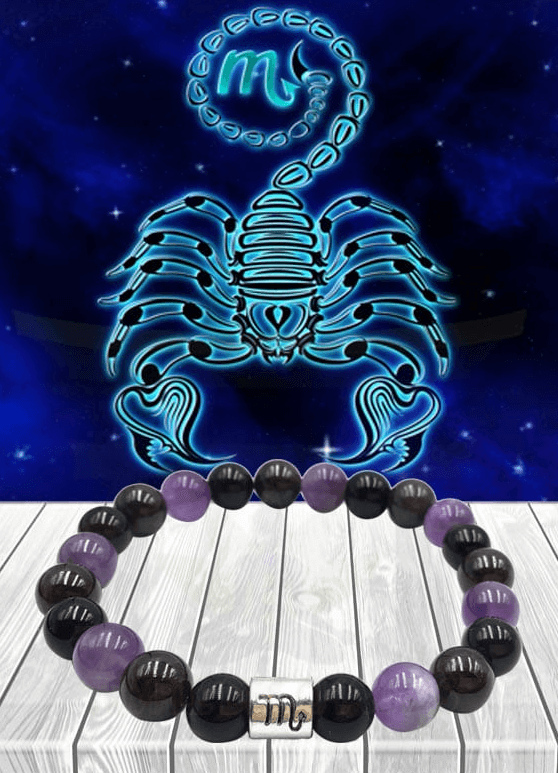
- Scorpio, born between 24 October and 22 November. Its volcanic temperament is soothed by contact with the stone;
- Sagittarius, born between 23 November and 21 December. Obsidian grounds this dreamer and sets both their feet back on earth;
- Capricorn, born between 22 December and 20 January. The rock reassures them and calms their contradictory feelings.
Alternative medicine and the obsidian stone
The modern age weighs on our bodies and our souls. Our minds tear apart over the course of our accelerated lives. Cold and dehumanising, conventional medicine treats visible wounds without relieving the deeper ailments.

Alternative practices fill this gap. By drawing closer to nature and taking inspiration from cultures the world over, they offer a holistic approach to beings and support your healing abilities. They listen to your concerns and their methods are based on respect for your sensitivity. Stones hold a central place in them.
Feng shui to harmonise the energies of your home
To organise your living space and harmonise the energy currents that run through it, feng shui relies on many rules. When your home is cleansed of its negative energies, it helps to improve your well-being and to attract success.

The benefits of this age-old Chinese art depend largely on the stones used, their shapes and their placement in your house.
Born of lava, obsidian corresponds to the fire, earth and water elements.
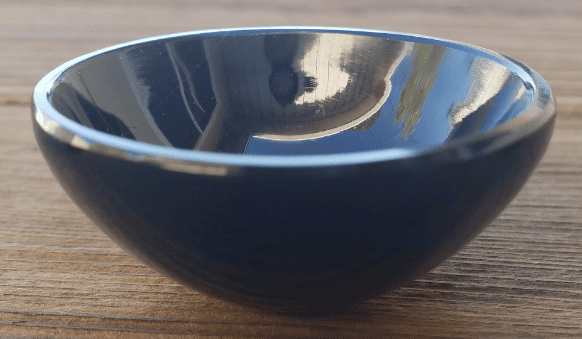
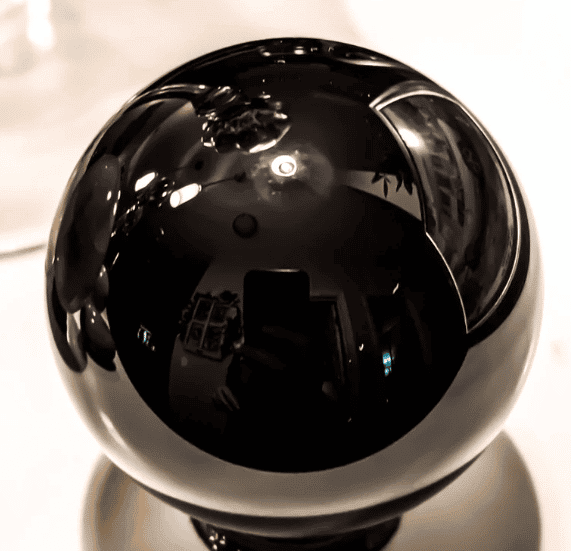
It is shaped into a sphere, a polished mirror or a bowl. A true sponge, it absorbs negative energies and must never come into contact with the ground. It requires regular cleansing.
Ideally, place it to the north. Positioned this way, it offers you constant protection and guides you along the path of your existence.
Dowsing to detect energy flows
The dowser perceives the energy flows of nature. Thanks to a pendulum, they manage to read them on their Bovis chart.
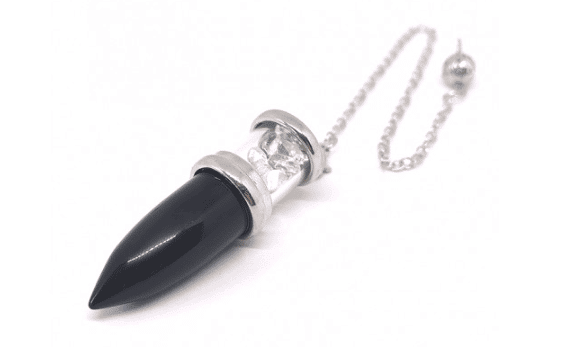
They recover lost objects, discover water sources and divine fragments of possible futures. Specialists even discern the impurities in the flows of the human body. Thus, they diagnose both physical and spiritual ailments.
Obsidian suits beginners. It protects them from negative waves and energy backlashes. Thanks to its powers of perception, it conveys clear and precise answers. It is better suited to searching for objects than to healing.
Crystal healing to support your healing abilities
Crystal healing is among the oldest medicinal practices in the world. From Prehistory onward, people recognised the power of stones. They shaped them into jewellery and wore them daily to benefit from their virtues. They even associated them with deities and sometimes devoted cults to them.
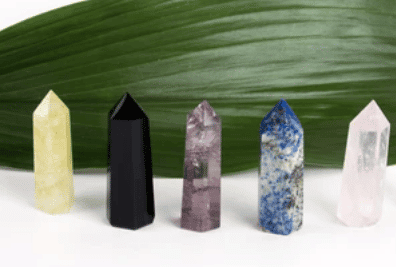
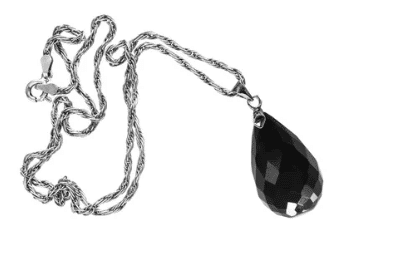
Born of these age-old traditions, certain pieces of jewellery are intended above all for crystal-healing practices. Craftsmen make high-quality obsidian pendants and bracelets. For you, they choose the finest gems.
Caution: crystal healing rests on personal beliefs and convictions ! The benefits and virtues presented here do not stem from sourced scientific opinions. Fine and precious stones support your natural powers of regeneration, but they do not heal you. If you wish to adopt obsidian in your daily life, never substitute it for a medical treatment prescribed by a doctor !
Caring for and revitalising your obsidian stone
Your obsidian forms and fills with energy in the heart of volcanoes. There, it acquires its vibrational potential at the origin of its virtues. However, in contact with you, it gradually depletes and becomes loaded with bad energies. To solve this common problem, regularly cleanse and recharge your stone. These two simple rituals rid it of its negative waves and renew its benefits.
Cleansing your obsidian
Obsidian soaks up energies. Your strong emotions, your negative thoughts and places laden with bad waves pollute it. It becomes dangerous and threatens your spiritual integrity. Cleanse it as soon as possible.
Water cleanses volcanic glass perfectly. It revives its lustre and purges it of its vibrational residue. A simple moving trickle discharges it quickly: a quarter of an hour is enough. To limit your ecological impact, immerse your stone in a good volume of water for several hours.
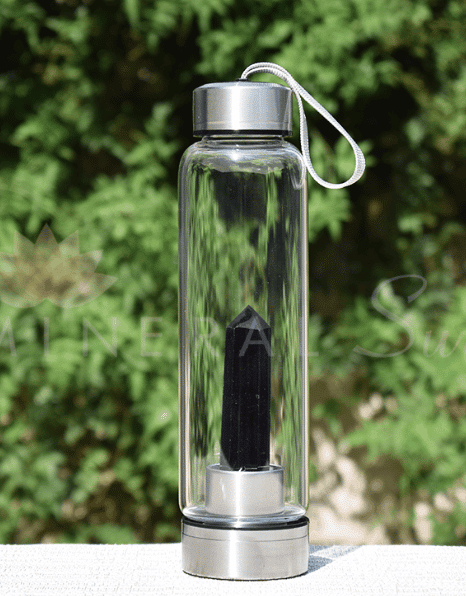
Once the ritual is complete, dry your obsidian with a soft cloth. Beware of oxidation if it is set on a metal mount.
Recharging your obsidian
Obsidian does not fear the sun. It absorbs its energy and recharges efficiently thanks to it. Under the warm rays of the solar star, it recovers the whole of its vibrational potential in a few hours.
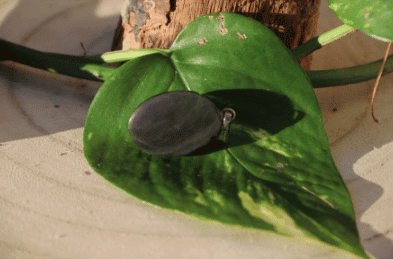
Virtues and benefits of the obsidian stone
Since Antiquity, the occult sciences have taken a particular interest in obsidian.
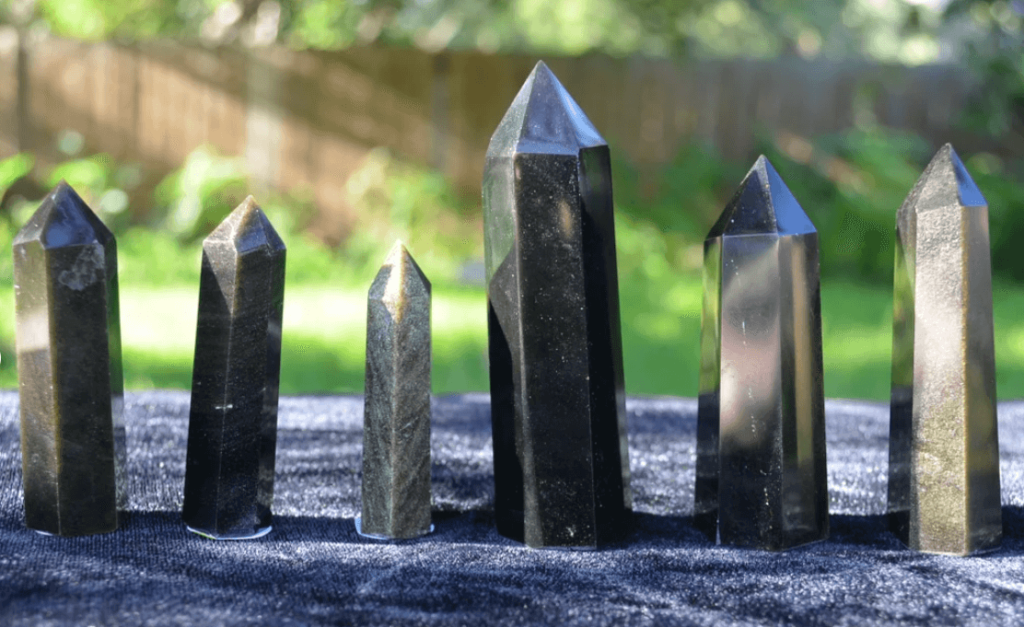
Practitioners appreciate its deep blackness. Far from associating a negative symbolism with it, they see it on the contrary as a shield stone, able to repel evil. They attribute many moral virtues and physical benefits to it.
Specialised varieties of obsidian
All varieties of volcanic glass possess common basic benefits, but their vibrational potentials differ slightly from one to another. Depending on its colour and patterns, each one specialises and amplifies a specific virtue. There is the obsidian:
- black. Common and prized, it has the strongest protective faculties;
- mahogany. Also meant to protect you, its undesirable side effects prove less numerous;
- blue. It has unique benefits that act on the eyes, behaviour and language;
- gold or silver. Very close, these two varieties prove ideal for meditation;
- snowflake. Its gentleness envelops you and lessens your anxieties;
- rainbow. It leads to inner fulfilment;
- Apache tears. It drives away sadness and stimulates your zest for life.
Obsidian and crystal-healing combinations
Since Prehistory, crystal healing has drawn on the natural virtues of obsidian. While it can be used alone, it grows in power in contact with other stones. By combining compatible gems, you amplify their effects. Their vibrational resonances multiply and take on new possibilities. To get the best from your stones, combine them according to your practice.
Do your pieces of jewellery support you and strengthen your energy as much as they please the eye? Choose your stones by their colours! Similar hues often indicate shared virtues. Although it is not perfect, this method ensures you avoid bad combinations.
- Obsidian is defined by its deep black. Even if some varieties tend toward green or red, pair it without hesitation with tourmaline, black agate, onyx, jet, black hematite, and so on.
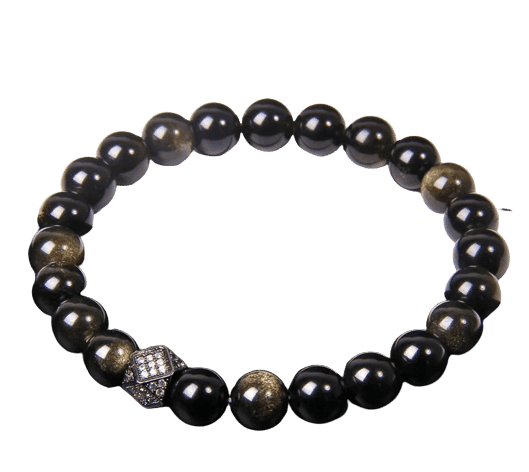
Do your stones rather accompany your meditations? Then refer to their chakras of choice! While it is possible to combine gems acting on several energy points, specialists advise focusing on a single one. Volcanic glass has a twofold affinity.
- To cultivate your Root chakra, opt for a smoky quartz, a galena, a graphite, a zircon, an andalusite, a bull’s eye or a garnet.
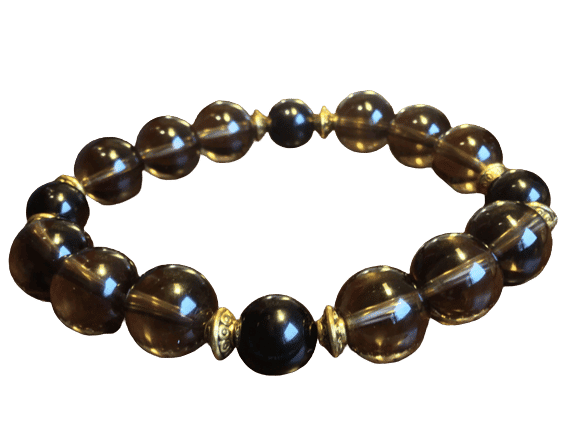
- If you work on your Third Eye, favour a cyclops agate, an aventurine, an azurite, a lapis lazuli or a hawk’s eye.
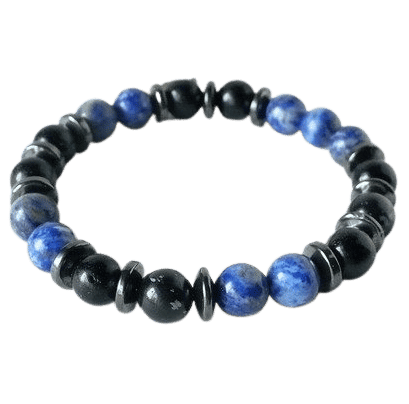
Does your crystal-healing practice fill a specific need? Are you looking for a particular benefit in stones? In that case, the crystal-healing practitioners recommend that you combine gems with close vibrational potentials. Possessing equivalent benefits, they harmonise and mutually amplify their virtues.
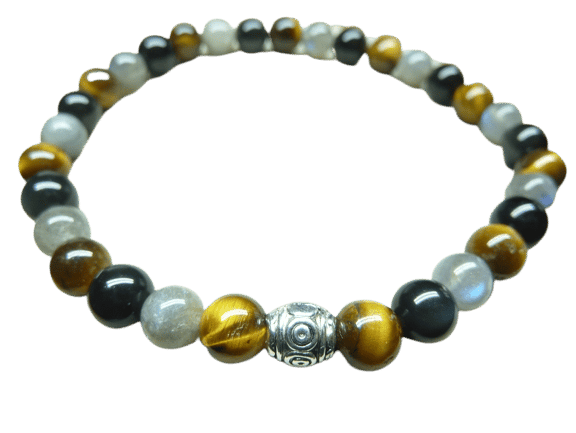
- A true protection against negative energies, obsidian pairs with labradorite, tiger’s eye, moonstone, rose quartz, fire opal, carnelian, and so on.
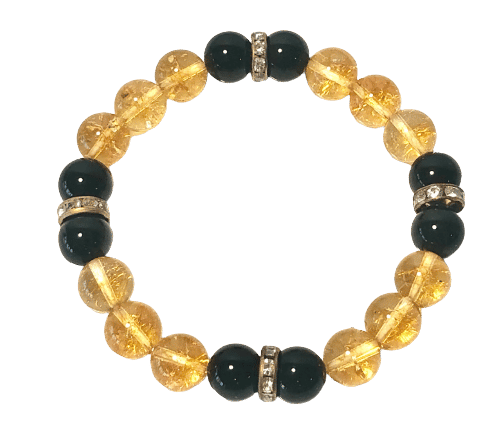
- Do you wish to ease your digestive troubles ? Pair your volcanic glass with citrine, carnelian, rock crystal, jasper or kunzite.
The spiritual, psychological and mental virtues of obsidian
Obsidian absorbs negative energies. It lessens the impact of micro-aggressions and supports your mental well-being. Linked in essence to the Third Eye, it lights your path toward inner peace. On the spiritual level, obsidian:
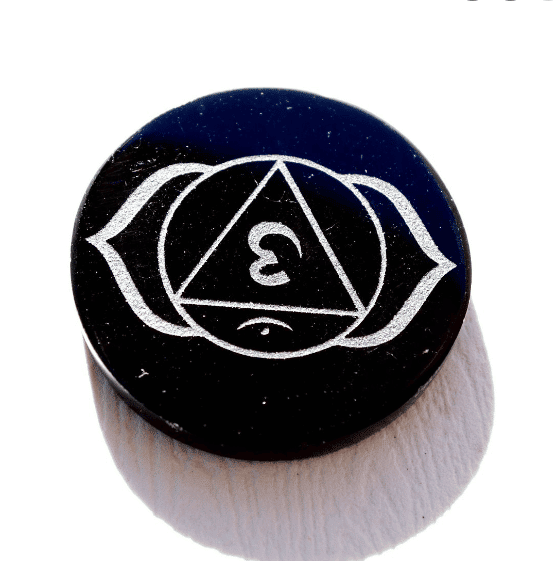
- protects you from negative influences;
- promotes emotional release;
- orders confused thoughts;
- dispels illusions and mirages;
- eases meditative states;
- encourages introspection;
- clears away doubts and worries;
- relieves anxieties;
- reduces stress.
The physical and bodily virtues of obsidian
A protective stone par excellence, volcanic glass preserves your body. It strengthens it, supports it and drives away chronic pain. On the physical level, obsidian:
- warms your body;
- strengthens your vital force;
- fortifies your organism;
- improves cell division;
- relieves inflammation;
- reduces infections;
- fights bacteria and viruses;
- soothes rheumatism;
- protects you from stomach ulcers;
- preserves your renal system;
- smooths your digestion;
- straightens stooped backs;
- stabilises your spine;
- spares you fractures;
- lowers the risks of osteoarthritis and arthritis;
- speeds up your blood circulation;
- increases your natural healing abilities;
- calms allergic irritations;
- supports the healing of dermatological problems.
No products found.
You will also like




This page does not contain child posts!
SOMMAIRE