Lenormand Tarot: Petit Lenormand Reading
Tarot Ana offers you the Lenormand Tarot Reading, a divinatory tarot performed by our Tarot reader.
Choose your cards and discover your complete future right away!
Introduction to the Petit Lenormand
The Petit Lenormand tarot
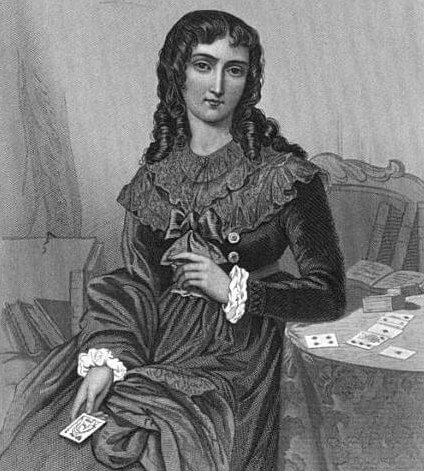
While today the practice of cartomancy is carried out just as much by men as by women, this was not always the case in the past. Indeed, in the world of fortune-telling, this art, like chiromancy and crystallomancy were, long ago, more reserved for women, while men confined themselves to the roles of mediums.
The most famous of these cartomancers is without a doubt Mlle Lenormand. She practised in the Paris of the early 19th century and her clients were highly renowned figures in the History of France. She is also the originator of 2 tarot decks : The Petit Lenormand and the Oracle of Belline.
The fabulous destiny of Mlle Lenormand
Marie-Anne Adélaïde Lenormand was not yet 10 years old when her father died in tragic circumstances. Her life as a young girl would be forever turned upside down and she would always keep a bitter feeling towards the emotions linked to death. Her mind being somewhat troubled by this sudden loss, she took refuge in artistic pursuits and took pleasure in attending many puppet shows.

It was at that same time that a Bohemian fortune-teller crossed her path and read the lines of her hand, foretelling a great destiny, with success in a foreign land…Greatly impressed by this divinatory experience, young Marie-Anne took up the game herself and began making predictions to her classmates, which was viewed with a very disapproving eye by the Mother Superior of the convent where she was being educated.
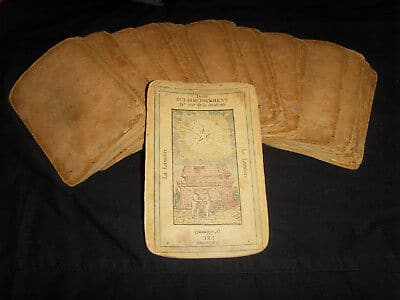
She would even be expelled and this situation would repeat itself in many other convents in the years that followed. No matter, what fascinated the young girl were numbers, astrology and her tarot card deck “ Etteilla ”, with the help of which she now practised divinatory readings. Marie-Anne was 14 years old when she left her family life, her studies and religion behind to join a relationship in Paris.
It was in the capital that she happened to make the acquaintance of the famous Doctor Gall. The latter took a keen interest in the young lady’s character, which impressed him with her passion for the divinatory arts. Being himself a renowned medium, he then let her know that he was convinced she possessed within her the 6th sense dear to fortune-telling. He then proposed that she follow him to London to assist him in his work.
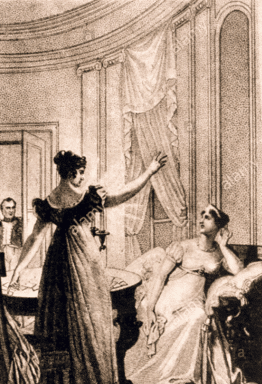
Which she accepted after having won a certain sum of money in the lottery, having had a vision of the numbers that turned out to be winning. Once in the capital of Great Britain, everything moved very quickly and Marie-Anne, henceforth known as Mlle Lenormand, became the official seer of the royal family.
After 3 years spent in London, where her reputation as a seer had preceded her to Paris, she decided to return to France, where she officially became a writer and bookseller, while still performing divinatory readings.
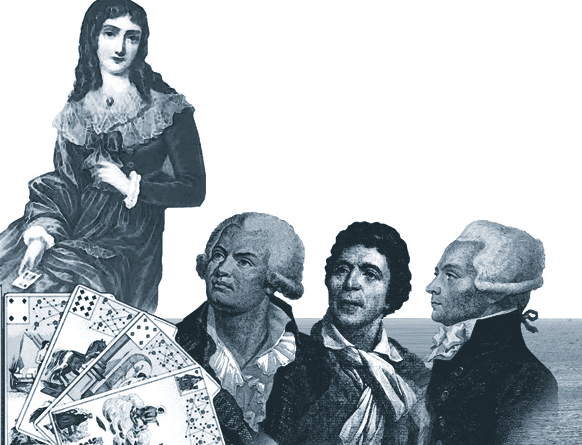
1789, the French Revolution. She was arrested several times, because fortune-telling was strictly forbidden in France, but she drew the spirits of great figures of that era, such as Marat, Saint-Just and Robespierre, who would become her clients.
Joséphine, Napoleon’s wife, would also be one of her main clients.
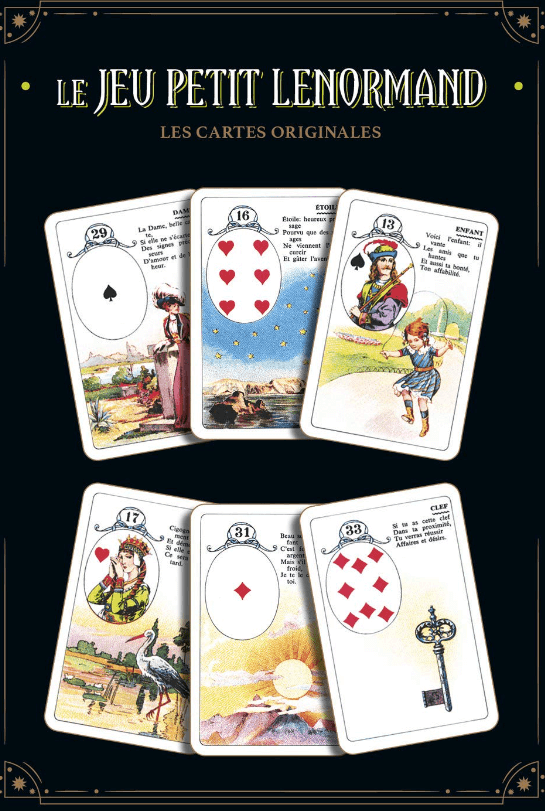
The last 20 years of her life would be devoted to the creation of new tarot decks. She drew inspiration of course from the famous Marseille tarot deck, but also moved away from it by adding more spiritual, astrological and feminine touches. She would complete on her own all the sketches and instructions for the future Lenormand tarot.
However, it was with the help of her first disciple, the mage Edmond, that they would jointly develop what would become, a century later, the Oracle of Belline. But that is another story… Today, Mlle Lenormand is still just as renowned in the world of tarot reading. For some, she is even revered.
The Petit Lenormand tarot
While naturally keeping the esoteric side proper to tarot decks, the woman who practised the “fortune-telling deck” in England decided to design cards that would be far closer to everyday life and the human values proper to the 19th century.
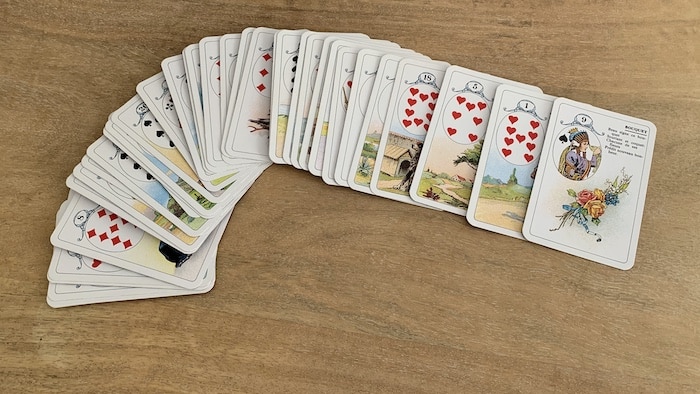
Besides characters, the 36 cards of the Lenormand tarot would be printed with animals, with astrological markers worthy of horoscopes, with spiritual values and with subjective figures corresponding to the social characteristics of the post-revolution era.
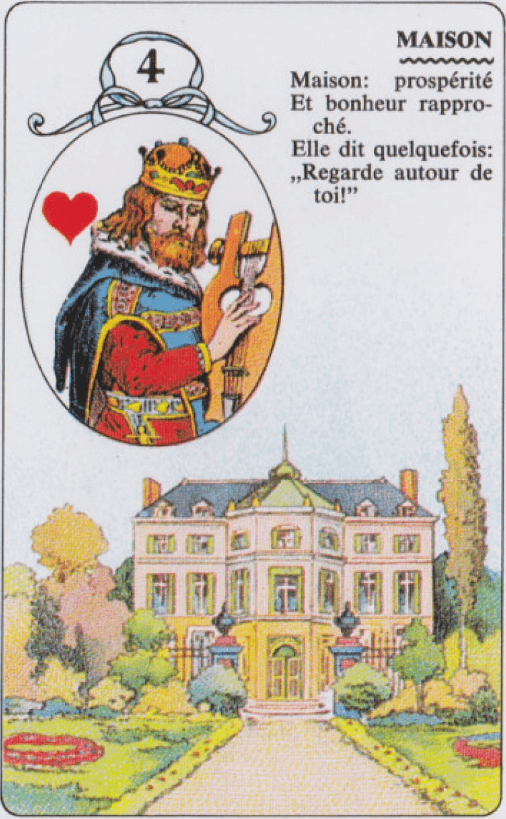
One also noted in this new tarot a more feminine orientation and therefore inevitably far more luminous than in the tarots designed previously. Each of the 36 cards would thus have its own number and highly symbolic representation, which are still exemplary today for being able to predict the future of a querent during a divinatory reading.
Mlle Lenormand having published several works on fortune-telling, it is only natural that she should have published one concerning all the secrets of her tarot. This book, like her other works, is still published today and can be obtained in an esoteric shop or online, on retail sites such as Amazon, with free delivery.
The composition of the Lenormand tarot
The cards making up this tarot deck reflect the personality of Mlle Lenormand and her open state of mind towards the new world that was taking shape in this early 19th century. They are synonymous with a new era and almost visionary as to the way of approaching it.
Among these 36 cards:
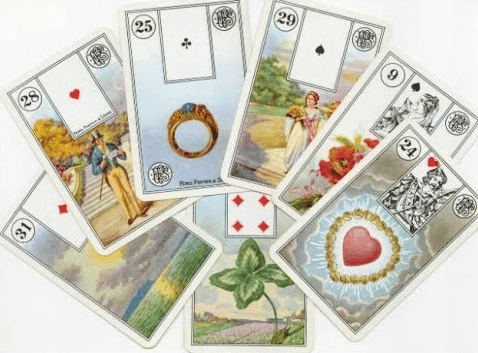
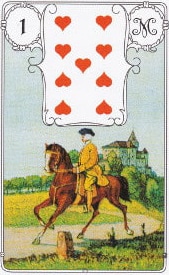
- the Rider announces a visit.
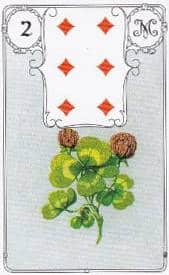
- The Clover speaks to us of luck.
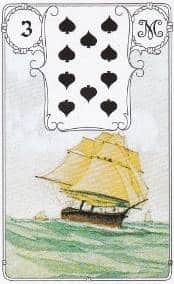
- The Ship embodies the journey to come.
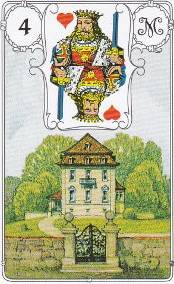
- The House symbolises the rooting of a family.
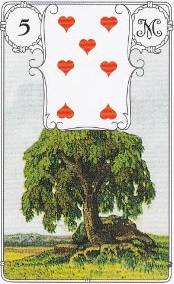
- The Tree announces a healthy life or an illness.
- The Cloud speaks to us of obstacles to overcome.
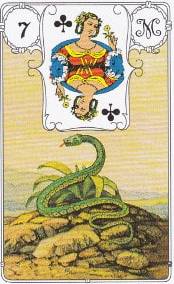
- The Snake is linked to betrayals and lies.
- The Coffin announces the illness or the death of a loved one.
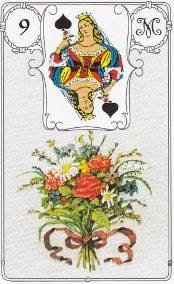
- The Bouquet is a sign of joviality and harmony.
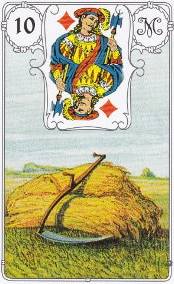
- The Scythe is synonymous with sudden rupture and dangers to come.
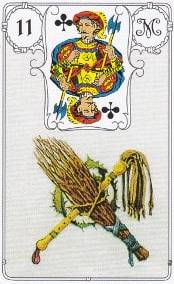
- The Whip announces quarrels and great misfortunes.
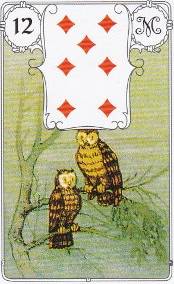
- The Birds are a sign of exchange and of good communication.
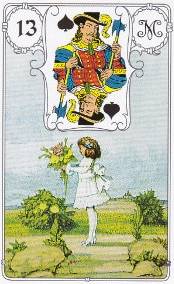
- The Child embodies the values of trust and innocence.
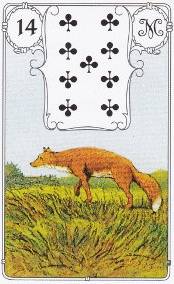
- The Fox warns us of a future deception.
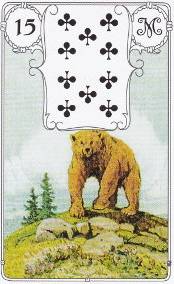
- The Bear is a sign of protective strength, but above all of money.
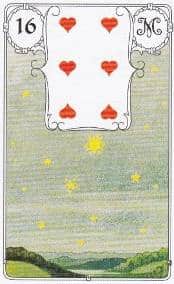
- The Star announces a happy omen for our destiny.
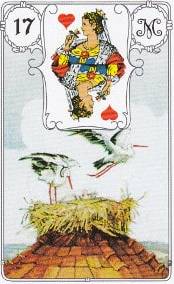
- The Stork speaks to us of change.
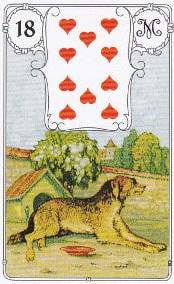
- The Dog symbolises everything related to friendships.
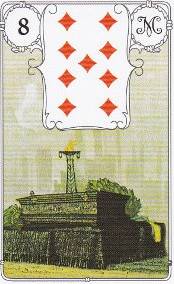
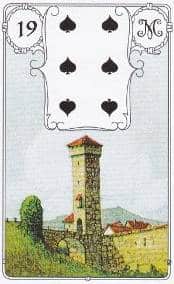
- The Tower announces the need to find oneself alone.
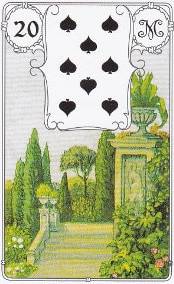
- The garden evokes social fulfilment.
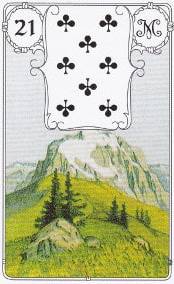
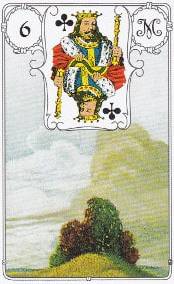
- The Mountain announces the arrival of an enemy.
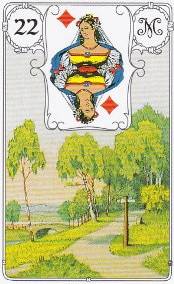
- The Path evokes periods of doubt.
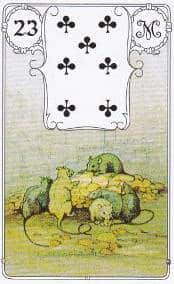
- The Mouse speaks to us of a theft.
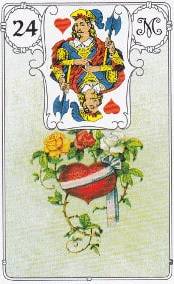
- The Heart evokes a life filled with love.
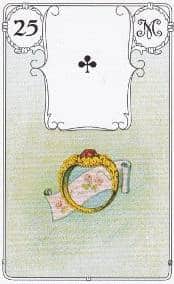
- The Ring announces a marriage or a separation.
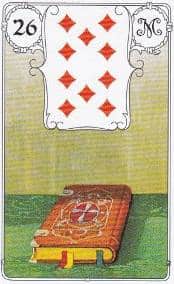
- The Book evokes the discovery of the unknown.
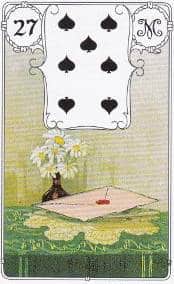
- The Letter speaks to us of contracts.
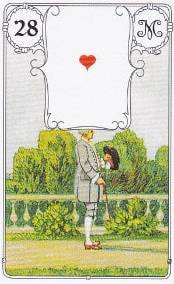
- The Gentleman evokes the masculine.
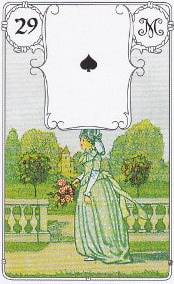
- The Lady embodies the feminine.
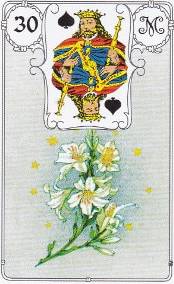
- The Lily is sincerity.
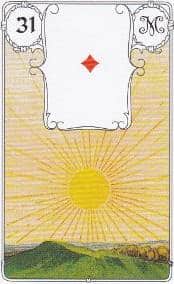
- The Sun evokes hope.
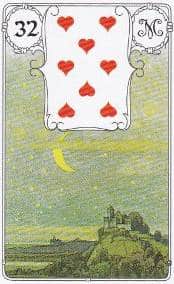
- The Moon symbolises the unconscious.
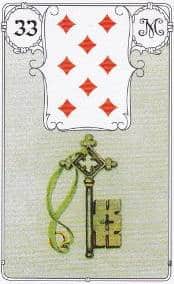
- The Key speaks to us of success.
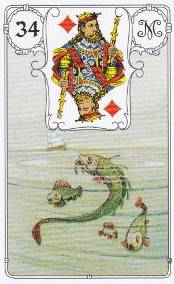
- The Fish is a sign of fortunate ventures.
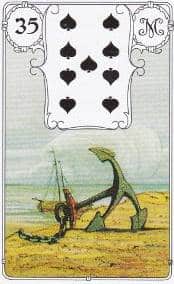
- The Anchor embodies prosperity.
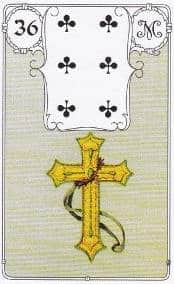
- The Cross is synonymous with sadness.
You will also like

SOMMAIRE