Divinatory Tarot – Free Reading
As far back as we go in time, we find traces of predictions of the future through clairvoyance. Thus, the divinatory arts are as old as the world, and were already practised in ancient Egypt under the pharaohs as well as in ancestral China. In Europe, even though a few soothsayers used it in Gallo-Roman times, it would not be until the Middle Ages that it developed under the influence of the wandering Bohemian women.
It was indeed these fortune tellers who would make famous the art of predicting one’s future to a querent. First, thanks to the lines of the hand and other crystal balls, then with the help of tarot cards.
Without really knowing it, they thus invented a new kind of clairvoyance : Divinatory Tarot.
OF 10 MINUTES BY PHONE
FOR A FREE 10-MINUTE READING BY PHONE
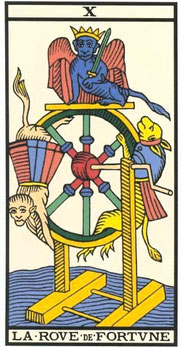
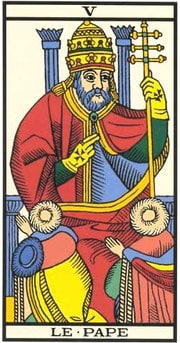
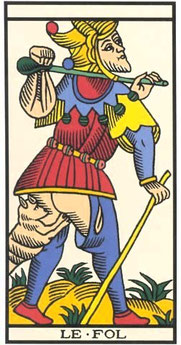
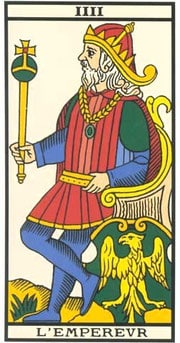
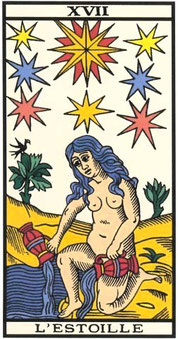
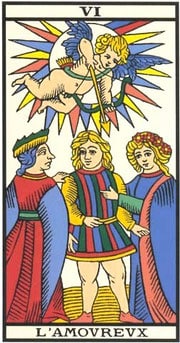
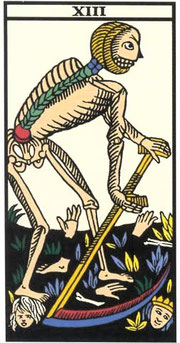
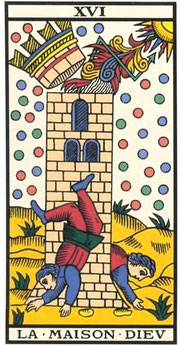
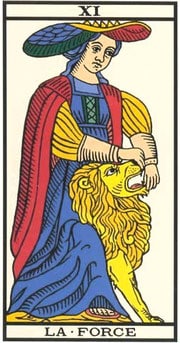
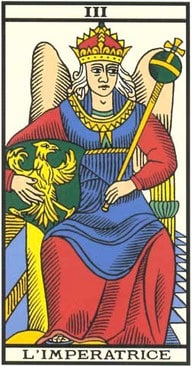
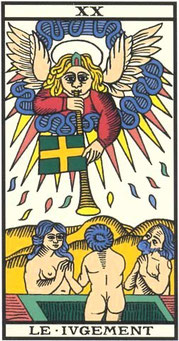
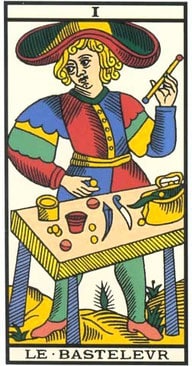
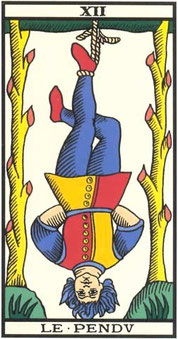
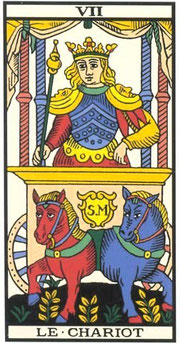
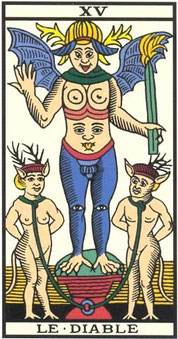
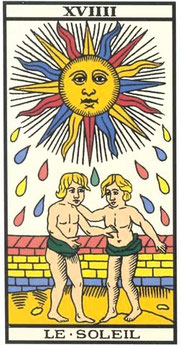
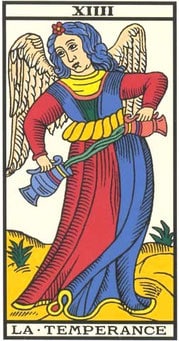
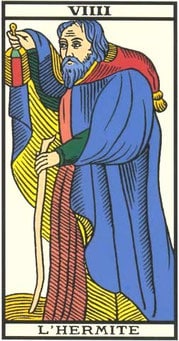
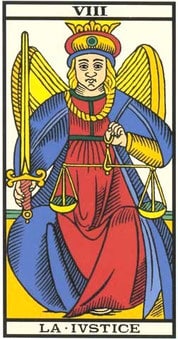
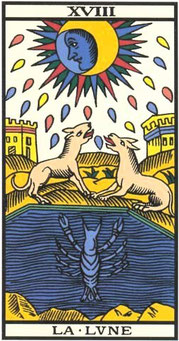
Very telling cards
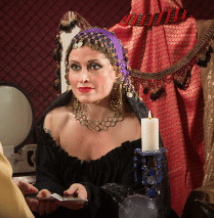
It was therefore in the middle of the long medieval period that France lived through, that card games made their appearance, coming from ancient Persia and the famous Silk Road whose starting point was Asia. Very quickly, the Romani people began to use these cards to make predictions about the future for people awaiting answers.
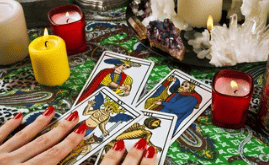
But it was in the 15th century, in the middle of the Renaissance, that cartomancy was somewhat turned upside down by a new deck of cards imported from Italy: the Tarot. For this new deck of cards was precisely to become more than a game, but truly a new tool for practising clairvoyance.
Indeed, with the arrival of the Tarot de Marseille, and its many spreads aimed at reading the future, the practice of clairvoyance using a tarot deck of cards was named by certain men of science and other alchemists the Divinatory Tarot.
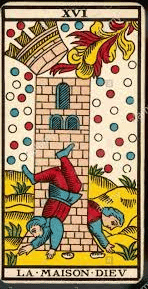
It must be said that from the very start, the cards of the Tarot de Marseille, called the blades, were very telling, with depictions of characters and symbolisations filled with values of an esoteric connotation.
A card such as the one called the House of God was on its own directly linked to certain spiritual forces tied to the world of occultism.
We then understand better why the interpretation of these cards during divinatory spreads gave rise to predictions of the future, and were to enjoy a resounding success that is still confirmed today.
The Divinatory Tarot de Marseille
With its 78 blades, divided into 2 distinct parts, the major arcana and the minor arcana, and its depictions endowed with esoteric, but also astrological and numerological, symbols, the Tarot de Marseille was therefore to revolutionise the world of clairvoyance. It must also be said that its 22 major arcana, of which the very first blade, called the Magician, represents the querent during a reading, are interpreted throughout an initiatory journey established by these same blades. And this initiatory journey leads to the destiny of a life, emphasising the most fascinating subjects, because cherished or feared, of any existence. Thus, the cards speak of love, and of the affective feelings inherent in what may move our heart, but they are just as talkative concerning the important notions of health, work and money. As for the other 56 blades contained within the Tarot de Marseille, which are called the minor arcana, we can say of them that they have a lesser impact, although they give many details about the querent’s personality, by taking an interest in past events that the latter might have buried deep within their memory. These 56 minor arcana are divided into 4 distinct suits: the Coins, which relate to material and financial matters, the Wands, which refer to everything that fascinates our personality, the Cups, which express our emotions and feelings, and the Swords, which embody everything related to action, change, strength and power. Each of these 4 suits is made up of 14 cards, numbered from 1 to 10, then a Page, a Knight, a Queen, and a King. While the Tarot de Marseille is still today the most famous and most widely used tarot in the entire world, there are nonetheless others that are just as excellent when it comes to divinatory predictions.
The other divinatory tarots and Oracles
We thus find many decks of tarot cards and other Oracles within the practice of divinatory tarot. Each has its own particularities and specificities, and some of them are affiliated with an ethnic group or nation of origin. But they all share the purpose of offering revelations concerning the personality and the future of a querent. Thus, among the best known we find the Egyptian tarot, the Gypsy or Romani tarot depending on the editions, the Rider-Waite tarot, the tarot of Mlle Lenormand, the Osho Zen tarot, the tarot of the Angels, the Persian tarot, the Yi-King reading, the Belline Oracle, the Grand Oracle of Love or the Oracle of Cupid depending on the editions, the Oracle of the Triad, or the Oracle of Ge. There are so many of them nowadays that it would be quite difficult to name them all. But each of these tarots or Oracles can be found in specialised shops, or directly online on the web by going to Google in search of very specific sites, or even more simply on Amazon.
How to learn divinatory tarot?
There are no miracle recipes for learning the practice of divinatory tarot, just as there are no schools or universities that can teach it to us. So, to get to the heart of the matter and connect with the basics and notions of tarology and divinatory tarot, you must first show yourself to be curious and therefore necessarily as intrigued as you are interested in this practice. The first essential thing to be in harmony with the interpretation of divinatory tarot cards is to be open-minded. You must indeed not be closed off to parallel worlds, and be in agreement with the fact that everything around us is one and the same vibration. You must also be endowed with a powerful instinct that can help us feel things, and with a certain clairvoyance that will not be negligible in interpreting what the cards have to reveal. These, then, are the essential elements to possess within oneself in order to claim to learn divinatory tarot or any other kind of clairvoyance for that matter. Nothing to do, therefore, with the « gift » that some people are said to have, but which must nonetheless be very profitable to them in order to practise the profession of clairvoyant. Then, to genuinely get started with the interpretation of divinatory tarot cards, there is nothing like getting hold of a book on the subject, along with a deck of cards to practise with. Many tarot readers have written on the subject, and authors such as Barbara Moore or Maggie Stiefvater open the doors to the secrets of divinatory tarot or the mysteries of esotericism, in books that are as relevant as they are fascinating. There are also many websites on the Internet where you can gather quantities of information on the interpretation of cards and the various spreads to perform within this practice. Sites such as those of Denis Lapierre or Mirabella are, for example, very good tools to get your hand in once you have already acquired the first pieces of knowledge.
You may also like

SOMMAIRE